


Dambulla Cave Temple and the Surrounding Countryside: Buddhist Heritage, Sunrise Views and Slow Travel
Dambulla is one of Sri Lanka's great cultural crossroads. It is known first for the Dambulla Cave Temple, also called the Golden Temple of Dambulla or Rangiri Dambulla Cave Temple, a UNESCO World Heritage Site and one of the island's most important Buddhist pilgrimage places. But Dambulla is also surrounded by a quieter countryside of paddy fields, village roads, rocky hills, market life, lakes and distant views toward Sigiriya. For a traveler who moves slowly, Dambulla becomes more than a famous cave temple. It becomes a peaceful base for Buddhist heritage, sunrise views and quiet rural travel.
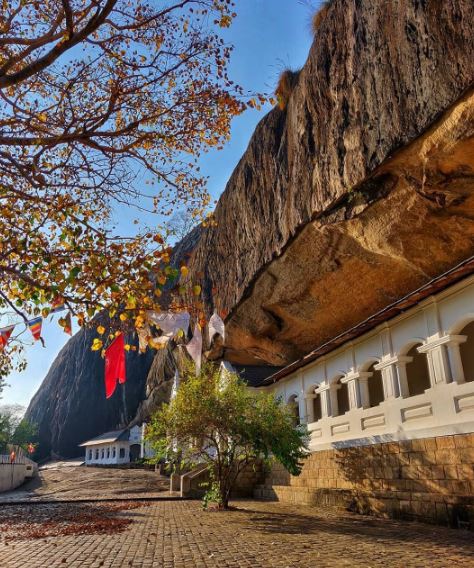
The beauty of Dambulla is in contrast. Below the temple, the town can feel busy and practical, with buses, shops, markets, pilgrims, travelers and roadside food. Above it, the cave temple sits on a rock, cooler and more silent, filled with Buddha statues, old murals, painted ceilings and centuries of devotion. Around it, the countryside stretches outward, connecting Dambulla to Sigiriya, Habarana, Kandalama, Minneriya and the wider Cultural Triangle.
Buddhist Heritage of the Cave Temple
The UNESCO World Heritage Centre describes Rangiri Dambulla Cave Temple as a sacred pilgrimage site for 22 centuries. It is famous as the largest and best-preserved cave-temple complex in Sri Lanka, with five sanctuaries, mural paintings covering around 2,100 square meters and 157 statues. These details are impressive, but the real feeling of Dambulla cannot be measured only in numbers. It is felt when you step into the cool dimness of the caves and see the walls and ceilings completely alive with Buddhist art.
The cave temple's history is traditionally linked with King Valagamba, who is said to have taken refuge in the caves during a difficult period and later transformed them into a place of Buddhist worship. Over centuries, kings, monks, artists and devotees added to the site. The caves contain reclining, seated and standing Buddha statues, images of kings, deities and disciples, and paintings that tell stories from Buddhist tradition and Sri Lankan history.
Dambulla is not only an archaeological monument. It is still a living Buddhist site. Devotees come with flowers, prayers and quiet respect. Monks, pilgrims and travelers share the same sacred space. A visitor should remember this before entering. The caves are beautiful, but they are also places of worship.
Quiet Cave Temple Atmosphere
Inside the caves, the atmosphere changes. The sunlight outside is strong, but the interior is shaded and still. The painted ceilings curve overhead like a sacred sky. Buddha statues rest in rows, some large and commanding, others small and quiet. The air feels old, cool and protected. Even when visitors are present, the caves can hold a deep silence if people move respectfully.
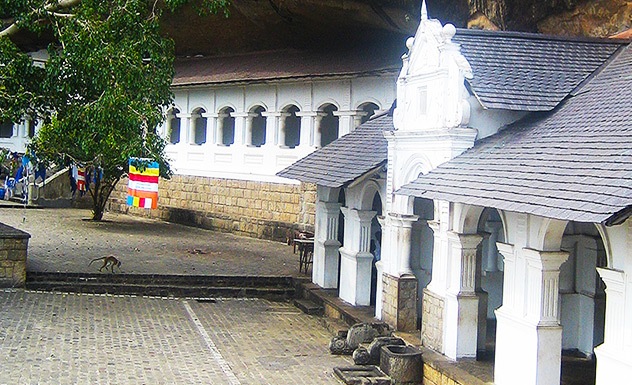
The quietness of the cave temple is one of its greatest gifts. It invites slower looking. Instead of rushing from cave to cave, pause and notice the details: the expression of a Buddha statue, the colour of a ceiling painting, the shape of a lotus pattern, the old stone underfoot, the way devotees place flowers near the shrine. Dambulla rewards attention.
Photography should be done with care. Flash, tripods or certain poses may be restricted or inappropriate, and visitors should never turn their backs disrespectfully toward Buddha images for casual photos. The best memory of Dambulla is not only a picture; it is the feeling of standing quietly inside a painted cave that has received devotion for centuries.
The Climb and the Countryside View
Reaching the cave temple requires a climb up the rock. The path is manageable for many visitors, but it can feel hot in the middle of the day. Morning or late afternoon is usually more pleasant. Along the way, the view opens over the surrounding plains. On clear days, travelers may see the shape of Sigiriya rising in the distance, surrounded by the flat green and brown country of the Cultural Triangle.
This view is important because it shows why Dambulla is such a good slow-travel base. The temple is not isolated from the land around it. It looks over farms, roads, reservoirs, village settlements and ancient routes. The countryside below has supported pilgrims, traders, monks and travelers for generations. From the rock, the landscape feels wide and historical.
Sunrise is especially beautiful in the Dambulla region. Even if the cave temple itself is not your sunrise location, the surrounding countryside offers soft morning light, misty fields, bird calls and views toward rocky hills. A slow traveler can wake early, drink tea, watch the sky change and then visit the temple before the day becomes hot.
Slow Travel Around Dambulla
Dambulla is sometimes treated only as a quick stop between Sigiriya and Kandy or as a practical base for bus travel. But it becomes more rewarding if you slow down. Spend time in the local market. Eat simple rice and curry. Walk through village lanes. Visit nearby reservoirs. Watch daily life around the roadside shops. Let the region feel ordinary as well as sacred.
The surrounding countryside is ideal for gentle exploration. Depending on where you stay, you may find paddy fields, coconut trees, home gardens, vegetable plots, lakes and small temples. Dambulla is close to Sigiriya, Pidurangala, Minneriya, Habarana and Kandalama, so travelers can use it as a quiet centre for a few days instead of moving hotel every night.
A slow Dambulla itinerary might begin with a sunrise view, followed by the cave temple in the morning. In the afternoon, rest during the heat, then visit a lake or village area in the evening. Another day can be used for Sigiriya or Pidurangala, and another for Minneriya or Habarana. This rhythm gives the Cultural Triangle more space.
Buddhist Heritage and Respectful Visiting
Because Dambulla Cave Temple is a sacred Buddhist site, respectful behavior matters. Wear clothing that covers shoulders and knees. Remove shoes where required. Keep voices low inside the caves. Do not touch murals or statues. Avoid posing in a way that disrespects Buddha images. Follow local signs and guidance.
Visitors should also protect the site from damage. The murals and cave interiors are precious and old. Moisture, flash photography, touching surfaces and careless crowding can harm heritage places over time. A slow traveler understands that sacred places are not only for personal enjoyment; they must be preserved for future generations.
Monkeys may be present around the temple approach, so keep food hidden and avoid feeding them. Feeding wildlife can create aggressive behavior and problems for both animals and visitors. Carry water, but take all plastic and rubbish away with you.
Food, Markets and Local Life
Part of Dambulla's charm is its everyday life. The town is known for trade, markets and local food. Travelers can find rice and curry, roti, hoppers, fruit, tea and simple snacks. The food may not always be fancy, but it can feel honest and local. A slow journey should include these ordinary experiences.
The market atmosphere also connects Dambulla with the surrounding countryside. Vegetables, fruit and produce from nearby farming areas move through the town. This makes Dambulla feel like a living regional centre rather than only a heritage attraction. The temple above and the market below are both part of the same place.
Peace Beyond the Famous Caves
The Dambulla Cave Temple deserves its fame. The caves, murals and Buddha statues are among Sri Lanka's greatest cultural treasures. But the surrounding countryside adds another layer of beauty. It gives the temple context: morning fields, village roads, distant rocks, lakes, local food and the slow rhythm of the dry zone.
For travelers who want more than a quick photo stop, Dambulla offers a powerful combination. It has Buddhist heritage, quiet cave-temple atmosphere, sunrise views and slow rural travel. Walk gently, dress respectfully, look carefully and leave time for the countryside. In that slower rhythm, Dambulla becomes not only a destination, but a peaceful experience of Sri Lanka's cultural heart.


Loading comments…