


Sinharaja Forest Biodiversity: Districts, Size, Animals, Ants, Plants, Water Sources and Rainforest Beauty
Last reviewed: June 15, 2026
Sinharaja Forest Reserve is one of Sri Lanka's greatest natural treasures. It is a wet-zone rainforest, a UNESCO World Heritage Site, and one of the last strongholds of primary tropical rainforest in the country. The name Sinharaja means "lion king," but the real royalty of this forest is its biodiversity: rare trees, endemic birds, insects, amphibians, reptiles, butterflies, mammals, streams, leaf litter, fungi, ants and the deep green silence of an ancient rainforest.
For nature lovers, Sinharaja is not only a place to walk. It is a living classroom. Every wet leaf, fallen branch, bird call and stream has a role. The beauty of Sinharaja is not like a wide beach or a single mountain view. It is layered, close, humid and alive. You enter under the canopy, and the forest surrounds you with sound, shade and movement.
Where Is Sinharaja? Districts and Location
Sinharaja lies in south-west Sri Lanka, in the island's wet zone. It is commonly connected with Ratnapura District and Galle District, with important access from the Deniyaya side in Matara District. Some broader references also mention Kalutara in relation to the wider forest landscape and boundary context. For a traveler, the practical entrances usually include Kudawa or Weddagala from the Ratnapura side and Deniyaya or Mederipitiya from the southern side.
The distance from Colombo depends on which entrance you use. By road, it is roughly 125 to 160 kilometers from Colombo, and the journey often takes about 3.5 to 5 hours depending on traffic, route, weather and hill-country roads. Many visitors start early because rainforest walks are best in the morning, when birds are active and the forest air is cooler.
Size of Sinharaja Forest
The size of Sinharaja can be confusing because different sources use different boundaries. The UNESCO World Heritage property is often cited at about 8,864 hectares, or 88.64 square kilometers. Other tourism and conservation references may use broader figures when including surrounding forest, buffer areas or related rainforest landscape. For a visitor, the important point is that Sinharaja is a narrow but ecologically rich forest belt of ridges, valleys and wet evergreen canopy.
It may not be the biggest forest in Sri Lanka by area, but it is one of the richest by biodiversity. That is why Sinharaja is internationally recognized. The forest protects species that are rare, endemic and sometimes difficult to see anywhere else.
The Beauty of the Rainforest
The first beauty of Sinharaja is the green canopy. Tall trees rise above you, smaller trees fill the middle layer, vines climb through the shade, and ferns, mosses and seedlings cover the forest floor. Sunlight rarely falls in straight lines. It arrives broken into soft pieces, filtered by leaves and mist.
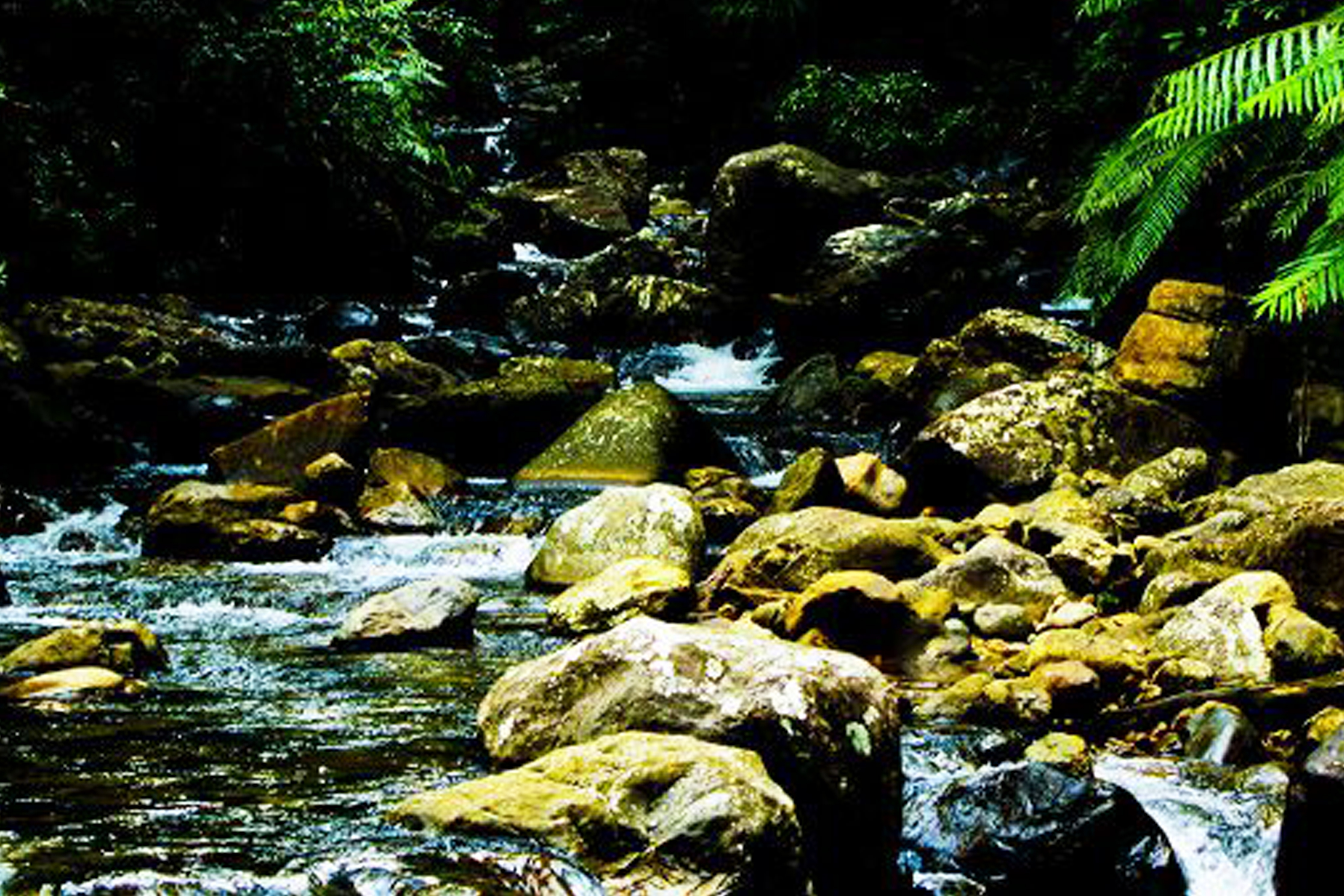
The air feels different inside Sinharaja. It is damp, cool under the canopy, and full of small sounds. You may hear cicadas, dripping water, bird calls, rustling leaves, distant streams, and sometimes the sharp warning calls of monkeys high above. Rain can arrive quickly and leave the whole forest shining. This is a place where beauty is not still; it is always growing, falling, flowing, eating, flowering and decomposing.
Animals of Sinharaja
UNESCO describes Sinharaja as especially important for endemic wildlife, particularly birds. The forest is famous for mixed-species bird flocks, where several species move through the trees together. Birdwatchers come hoping to see the Sri Lanka blue magpie, red-faced malkoha, green-billed coucal, Sri Lanka spurfowl, ashy-headed laughingthrush and many other wet-zone species.
Mammals are present too, though some are difficult to see. Purple-faced langurs and toque macaques may be seen or heard in the canopy. Giant squirrels move through branches. Small mammals, bats, civets and mouse deer live more quietly in the forest. Leopards are part of the broader ecosystem but are rare and secretive; visitors should not expect to see one on an ordinary walk.
Sinharaja is also rich in reptiles, amphibians, butterflies and insects. Wet-zone frogs, lizards, snakes, butterflies and beetles all form part of the rainforest system. Many species are endemic, meaning they are found naturally only in Sri Lanka or in a limited region of the island. This high endemism is one of the reasons Sinharaja is so valuable for conservation.
Ants: Small Creatures With Big Importance
Ants may be small, but in Sinharaja they are part of the forest's hidden machinery. Research on ants in Sinharaja has studied ground-dwelling species using methods such as pitfall traps and leaf-litter extraction, because many ants live in soil, rotting wood and fallen leaves rather than in obvious nests beside a path.
Ants help the rainforest in several ways. They break down dead matter, move seeds, turn soil, hunt smaller insects, clean up food scraps, and become food for other animals. Some ants live in close relationships with plants or other insects. Some are predators, while others are scavengers. When scientists study ants, they can learn about forest health, disturbance and recovery because ants respond quickly to changes in habitat.
For visitors, ants are a reminder to look down as well as up. Sinharaja is not only tall trees and colorful birds. It is also the leaf litter beneath your feet, where thousands of small lives are working every moment.
Plant Species and Endemic Trees
Sinharaja's plant diversity is extraordinary. UNESCO notes that more than 60% of the trees are endemic, and many are rare. Vegetation research has recorded about 340 woody plant species in Sinharaja, representing a large share of Sri Lanka's woody plant diversity. Other conservation references describe 139 endemic trees and woody climbers in the reserve.
The forest is mainly lowland wet evergreen rainforest, with areas of sub-montane forest at higher elevations. Dominant rainforest trees include dipterocarps and many wet-zone species adapted to heavy rain, shade and competition for light. The canopy protects orchids, ferns, lianas, palms, shrubs, seedlings and epiphytes. Some plants grow on the ground, some climb, and some live attached to other trees without taking food directly from them.
This plant structure creates habitat for animals. Birds feed on fruits and insects. Monkeys move through branches. Frogs breed in wet places. Insects use leaves, bark, flowers and rotting wood. The forest is not a collection of separate species; it is a connected web.
Water Sources and Streams
Water is one of Sinharaja's greatest gifts. The rainforest receives heavy rainfall and acts like a living sponge. It slows water, holds moisture, feeds streams and protects soil from erosion. Sinharaja is associated with important south-western river systems, including parts of the Kalu Ganga basin and the Gin Ganga catchment. Small streams, pools, waterfalls and wet gullies run through the forest, especially during rainy periods.
These water sources support both wildlife and people. Frogs, fish, insects and many plants depend on clean flowing water. Villages and farmland around the forest also benefit from the forest's role in regulating water. When rainforest is protected, water stays cleaner and more reliable. When forest is damaged, streams can become muddy, flashier and less stable.
This is why Sinharaja should not be seen only as a tourist attraction. It is also a water-protection system for the landscape around it.
How to Visit Respectfully
Visitors should enter Sinharaja with a licensed or approved guide. The forest can be wet, slippery and confusing, and a guide helps with safety, wildlife spotting and conservation rules. Wear good walking shoes, carry leech socks if needed, bring water, avoid bright perfumes, and protect cameras from rain. Do not play loud music, do not remove plants, do not feed animals, and do not leave plastic waste.
Leeches are part of the rainforest experience, especially in wet weather. They are unpleasant for some visitors, but they are not a reason to harm the forest. Dress properly and stay calm. A slow, respectful walk is better than rushing through trails.
For readers who enjoy calm nature guides, the article on Mandaram Nuwara's misty village life gives a different hill-country nature mood, while Mirissa whale watching shows Sri Lanka's marine biodiversity.
Final Thoughts
Sinharaja Forest is one of Sri Lanka's living miracles. Its size may seem modest compared with vast forests in other countries, but its biodiversity is immense. In one rainforest walk, you can experience endemic trees, rare birds, hidden mammals, frogs, butterflies, ants, streams, fungi and the deep breathing green of the wet zone.
The real beauty of Sinharaja is that everything belongs together. The ants in the soil, the orchids in the branches, the langurs in the canopy, the streams in the valley and the rain on the leaves are all part of the same life system. To visit Sinharaja is to understand that Sri Lanka's natural beauty is not only something to see. It is something to protect.


Loading comments…