


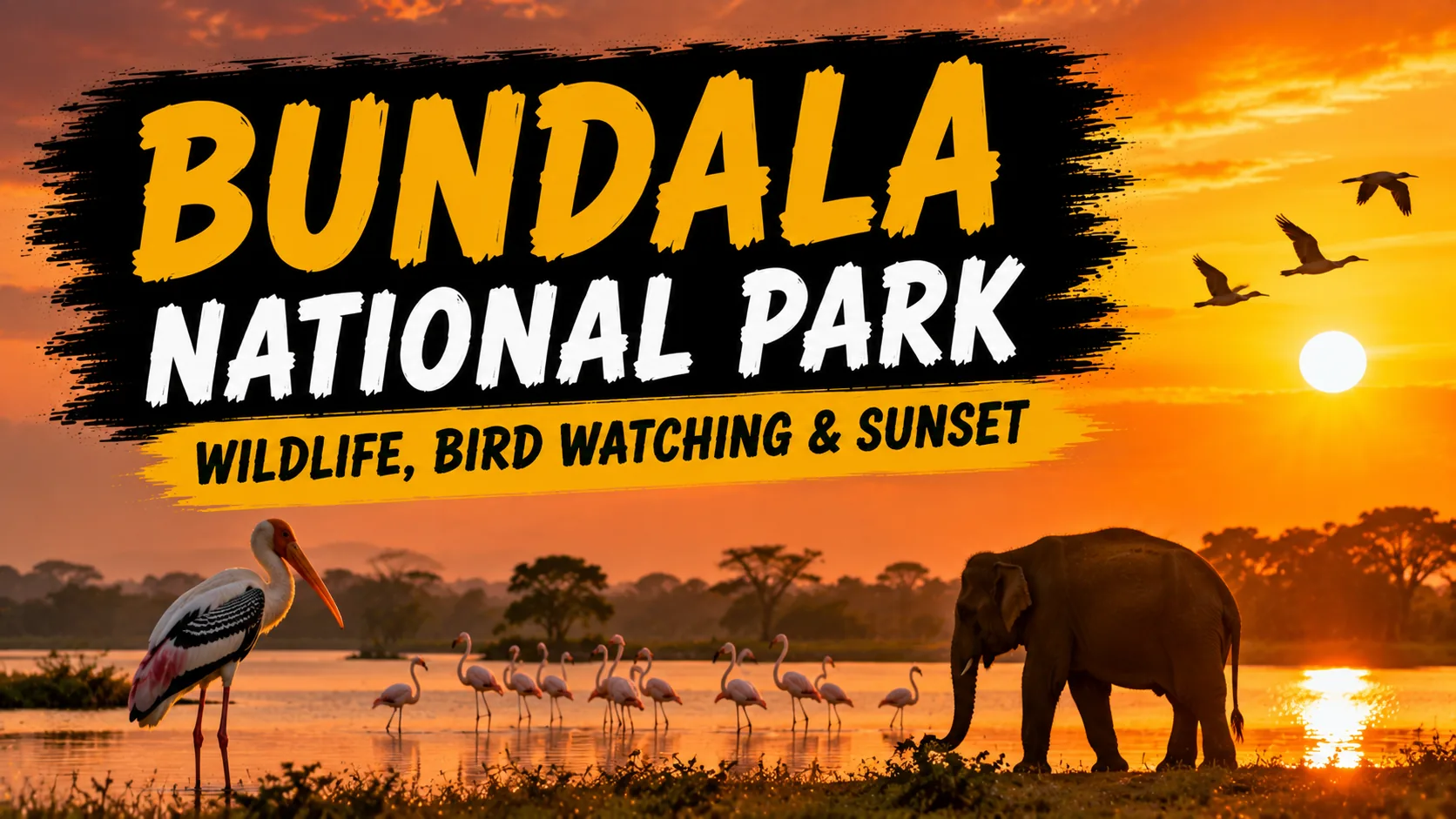
Bundala National Park: Bird Watching, Wildlife and Sunset Beauty in Sri Lanka
Bundala National Park is one of Sri Lanka's finest destinations for bird watching, wildlife safaris and peaceful sunset scenery. Located in the Southern Province near Hambantota, Bundala is a very different experience from the island's more crowded safari parks. It is not only a place to search for large animals. It is a wetland world of lagoons, salt pans, scrub forest, dunes, water birds, crocodiles, elephants and glowing evening light.
For nature lovers, Bundala has a quiet magic. The landscape feels open and spacious, with shallow lagoons reflecting the sky and birds moving across the water in flocks. In the early morning, the park wakes slowly with bird calls, soft light and fresh air. In the evening, the same lagoons turn gold, and the sunset can make the whole wetland look like a painting. Bundala is a destination for travelers who enjoy patient observation rather than rushing from one sighting to another.
A Ramsar Wetland and Biosphere Reserve
Bundala is internationally important because of its wetland habitats. It became Sri Lanka's first Ramsar wetland, recognizing its value for migratory water birds and wetland conservation. Later, it was also recognized as a UNESCO biosphere reserve. These titles are not just labels; they show how important Bundala is for biodiversity, water birds and the ecological balance of the southern coast.
The park includes lagoons, marshes, scrubland, sand dunes and coastal habitats. This mixture creates feeding, resting and breeding spaces for many species. The shallow water attracts waders and water birds. The scrub forest shelters mammals and reptiles. The coastal edge connects the park with the wider movement of birds and marine life. Because of this variety, every safari in Bundala feels slightly different.
Bird Watching Paradise
Bird watching is the heart of Bundala National Park. The park is famous for hosting nearly 200 bird species, including many migratory birds. During the migration season, especially from around September to March, the wetlands become especially active. Birds arrive from distant regions, using Bundala's lagoons and mudflats as feeding and resting grounds.
One of the most famous sights is the greater flamingo. When flamingos gather in the shallow lagoons, their pale pink forms create one of the most beautiful scenes in Sri Lankan birding. Visitors may also see pelicans, painted storks, openbills, black-headed ibis, Eurasian spoonbills, sandpipers, plovers, terns, herons, egrets, bee-eaters, kingfishers and many other wetland species. Peacocks are also common in the dry scrub, often adding bright color to the safari tracks.
Bundala is excellent for both serious birders and casual travelers. A serious birder can spend hours identifying species, watching behavior and photographing water birds. A first-time visitor can simply enjoy the movement, color and sound of the wetlands. The best bird watching often comes with patience. Instead of expecting one dramatic moment, Bundala rewards those who watch slowly as birds feed, fly, call, land and rise again from the water.
Wildlife Beyond Birds
Although Bundala is best known for birds, it is also home to many other animals. Crocodiles are among the most memorable sightings, often resting near water or lying still along the muddy edges of lagoons. Both wetland and dry-zone habitats support reptiles such as monitor lizards, and the park is also known for mammals including spotted deer, wild boar, monkeys, jackals and a small number of elephants.
Elephant sightings in Bundala are not as predictable as in some other parks, but seeing one in this open wetland landscape can be special. The animal may appear near scrub forest, walk across a track or feed quietly in the distance. Because Bundala is less crowded than some famous safari destinations, wildlife encounters can feel more peaceful and natural.

The park is also important for reptiles and coastal wildlife. Crocodiles, water monitors, tortoises and snakes all form part of the ecosystem. The coastal areas near Bundala are connected with sea turtle habitats in the wider region. This reminds visitors that the park is not a simple animal-viewing ground, but a living system where wetlands, scrubland, coast and wildlife are connected.
The Beauty of Bundala's Lagoons
The lagoons are Bundala's greatest visual treasure. Their shallow waters reflect clouds, birds and changing light. In the dry season, water levels may fall and expose muddy feeding areas for birds. After rain, the wetlands change again, bringing new reflections and fresh life. This constant movement makes Bundala attractive for photographers and nature lovers.
Unlike forest parks where animals may be hidden, Bundala has many open views. A safari vehicle can pause beside a lagoon, and the visitor can watch quietly as the landscape reveals small details: a heron standing motionless, a crocodile's eyes above the water, a flock of birds turning together in the sky, or a peacock walking across the road. The beauty is often gentle rather than dramatic, but it stays in the mind.
Sunset in Bundala
Sunset is one of the best times to experience Bundala National Park. As the day cools, the light becomes soft and golden. Birds move across the sky toward resting places, animals become more active, and the lagoons catch the colors of evening. The park's open landscape makes sunset feel wide and peaceful.
For photographers, evening is especially rewarding. The silhouettes of birds against the sky, reflections in the water and warm light on the scrubland can create beautiful images. Even for visitors without cameras, the sunset safari atmosphere is memorable. It is the kind of moment that asks people to become quiet and simply watch the day end over the wetlands.
Best Time to Visit
Bundala can be visited throughout the year, but bird activity is especially rich during the migratory season. Many travel references highlight the period from about September to March as a good time for migratory birds. Morning and late afternoon safaris are usually better than the hot middle of the day, both for wildlife viewing and for comfort.
Morning safaris are excellent for fresh light, cooler air and active birds. Evening safaris are ideal for sunset, warm color and a more relaxed mood. Travelers with a strong interest in bird watching may prefer to go with a knowledgeable naturalist or guide who can identify species and explain behavior.
A Calmer Alternative to Busy Safari Parks
One of Bundala's strengths is its calmness. Sri Lanka has many famous wildlife parks, but some can become very crowded during peak seasons. Bundala often feels quieter, making it ideal for travelers who want a slower safari. It is also a good choice for families, photographers, bird lovers and people who enjoy wetlands more than high-speed wildlife chasing.
The safari experience here should be respectful. Drivers and visitors should keep a safe distance from animals, avoid loud noise, never feed wildlife and stay on permitted tracks. Birds and animals need space, especially in sensitive wetland areas. Responsible behavior protects the park and also gives visitors better, more natural sightings.
Responsible Travel in Bundala
Because Bundala is an internationally important wetland, visitors should treat it with special care. Plastic waste, careless driving and disturbance to birds can harm the very beauty people come to see. Travelers should carry back all waste, avoid single-use plastics when possible and choose safari operators who respect park rules.
Bird watching also requires patience and kindness. Getting too close for a photograph can disturb feeding or resting birds. A better approach is to observe quietly from a respectful distance. In Bundala, the finest moments often come when nature feels safe enough to continue normally around you.
A Wetland Jewel of Sri Lanka
Bundala National Park is a wetland jewel of Sri Lanka. It offers bird watching, wildlife, lagoons, crocodiles, elephants, peaceful safari roads and unforgettable sunset views. It may not always deliver the loud excitement of a big-cat safari, but it gives something equally valuable: the calm beauty of a living wetland.
For travelers who love birds, Bundala is one of the best places in the country. For photographers, it offers light, reflections and open scenery. For families and slow travelers, it offers a gentle safari experience full of learning and wonder. And for anyone who wants to understand Sri Lanka's natural diversity, Bundala shows how powerful and beautiful a wetland can be.


Loading comments…