


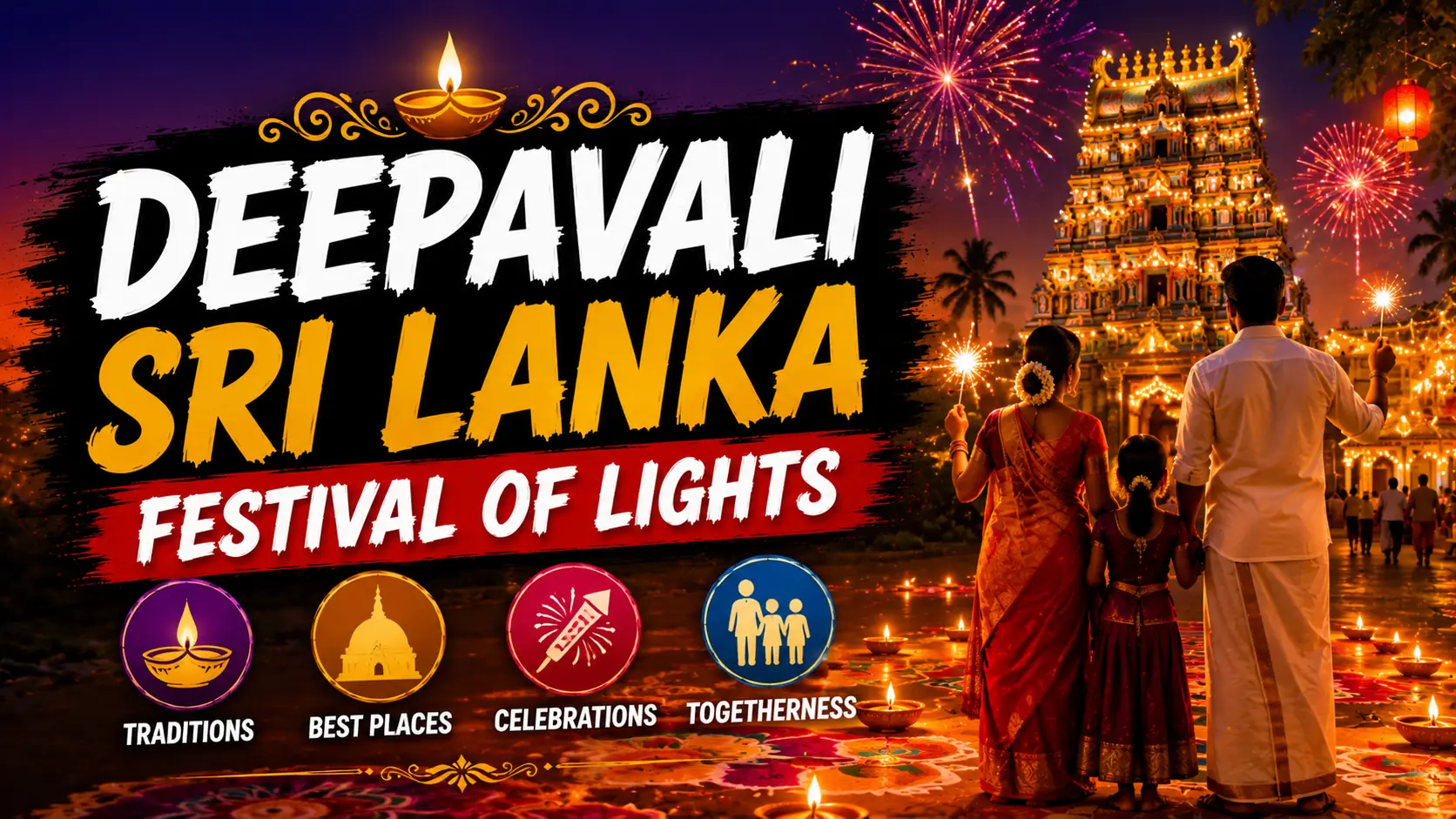
Deepavali in Sri Lanka: Traditions and Best Places to Celebrate the Festival of Lights
Deepavali, also known as Diwali, is one of the most beautiful cultural festivals celebrated in Sri Lanka. The festival is especially important to the Hindu community, but its message is understood across the island: light over darkness, good over evil, knowledge over ignorance and hope over fear. In homes, temples, shops and streets, small lamps, colorful rangoli patterns, new clothes, prayer and sweetmeats create a warm festival atmosphere that is both joyful and spiritual.
In Sri Lanka, Deepavali Festival Day is a national public holiday. Deepavali in 2025 was observed on Monday, 20 October 2025, as a statutory public and bank holiday across the country. The date changes each year according to the Hindu lunar calendar, and in 2026 Deepavali falls on Sunday, 8 November. For travellers, this means the best plan is to check the current holiday calendar before arranging temple visits, transport, shopping or hotel stays.
The Meaning of Deepavali
The word Deepavali is often understood as a row of lights. The lighting of clay oil lamps, or diyas, is the strongest visual symbol of the festival. In Sri Lankan Hindu homes, lamps may be placed near entrances, windows, verandas and prayer rooms. Their glow represents the removal of darkness from life and the invitation of blessings, peace and prosperity into the home.
Deepavali is connected with different stories and devotional traditions across the Hindu world. Some communities remember Lord Rama's return after exile, while others focus on Lord Krishna's victory over Narakasura or the worship of Goddess Lakshmi. In Sri Lanka, the festival is shaped by Tamil Hindu family life, temple worship and local food traditions. The meaning remains simple and powerful: a home, a heart and a society should move toward light.
How Sri Lankan Families Celebrate
Many families begin preparation before the festival day. Houses are cleaned, entrances are decorated, new clothes are purchased and ingredients are prepared for sweets and savouries. On the morning of Deepavali, devotees may bathe early, wear fresh clothing and visit a kovil for special poojas. Temples across the island hold ceremonies with bells, lamps, flowers, incense, chanting and offerings to deities.
At home, families light lamps and arrange rangoli designs near the entrance. Rangoli patterns are created with colored powder, rice flour, flower petals or other decorative materials. They welcome good fortune and make the doorway look festive. Children enjoy the colors, elders guide the rituals and neighbours often exchange greetings, food and blessings.
Traditional sweetmeats are an important part of the celebration. Sri Lankan Deepavali tables may include laddu, jalebi, halwa, palkova, murukku, mixture, payasam, sweet pongal and other homemade treats. In Tamil homes, vegetarian meals are common around temple worship, although food customs vary by family. Sharing sweets is a way of spreading happiness, and even a small plate offered with kindness carries the spirit of the festival.
Temples and Spiritual Atmosphere
The best way to understand Deepavali in Sri Lanka is to visit a Hindu temple respectfully. Kovil worship during Deepavali is filled with sound, fragrance and color. Devotees bring flowers, fruits, coconuts and oil for lamps. Priests conduct poojas, bells ring, camphor flames are offered and families stand with folded hands. For visitors, the temple atmosphere shows that Deepavali is not only decoration; it is a day of prayer, gratitude and inner renewal.
Foreign and local visitors should dress modestly when visiting temples. Shoulders and knees should be covered, shoes must be removed where required, and photography should be done only if allowed. It is better to watch quietly and follow the behaviour of devotees. Deepavali is welcoming, but it is still a sacred day for many families.
Best Places to Celebrate Deepavali in Sri Lanka
Jaffna is one of the strongest places to experience Deepavali because Hindu Tamil culture is deeply woven into the daily life of the city. Temples such as Nallur Kandaswamy Kovil and other local kovils may be busy with devotees, and the surrounding streets carry a festive feeling. Jaffna is also excellent for tasting northern Tamil food, sweetmeats and vegetarian festival meals. Travellers should plan respectfully, because temple spaces can be crowded and deeply devotional.
Colombo is another practical and lively place for Deepavali. Areas such as Wellawatte, Bambalapitiya, Kotahena, Pettah and Dehiwala have Hindu temples, Tamil restaurants, textile shops and sweet shops where the festival mood can be felt. Colombo is especially convenient for travellers who want to combine temple visits, shopping, city hotels and multicultural dining. In the days before Deepavali, shops selling clothes, lamps, sweets and decorations can become very active.
Kandy offers a gentler hill-country setting. Hindu temples in and around the city mark the festival with poojas, while the cooler climate makes evening lamp-lighting especially pleasant. For travellers already visiting the Temple of the Tooth Relic, Kandy Lake and the central hills, Deepavali adds another layer of cultural experience, showing the island's religious diversity in a compact city.
The plantation areas of the central highlands are also meaningful places to understand Deepavali. Towns and estates around Nuwara Eliya, Hatton, Talawakelle, Bandarawela and Badulla have large Tamil communities, and Deepavali is an important family holiday. The celebrations here may feel more local and less tourist-focused, with workers returning home, families visiting temples and houses glowing with lamps in the cool mountain air.
Trincomalee and Batticaloa on the eastern side of Sri Lanka also offer beautiful Hindu cultural experiences. Their temples, coastal setting and Tamil heritage make Deepavali meaningful and atmospheric. In these areas, the festival can be combined with beach walks, seafood for non-festival days, local markets and visits to famous kovils, while still keeping the festival day respectful and spiritual.
Travel Tips for Deepavali Visitors
Because Deepavali is a public and bank holiday, some banks, government offices and businesses may close or work shorter hours. Public transport can be busy before and after the holiday as families travel to their hometowns. Book intercity trains, buses or private transport early if your travel dates fall around the festival. If you need cash, medicine or essential items, arrange them before the holiday.
If you are invited to a home, take a small gift such as fruit, sweets or flowers. Dress neatly, remove shoes if the household expects it, and accept food with gratitude. Many families are proud to share Deepavali customs, but visitors should not treat private rituals as a photo opportunity. Ask before taking pictures, especially of prayer rooms, elders or children.
At temples, avoid leather items where local rules discourage them, stand aside during rituals, and do not step in front of devotees making offerings. If you see rangoli at a doorway, do not walk over it. If fireworks are used in some neighbourhoods, keep a safe distance and protect young children and pets. The most beautiful Deepavali experience is not the loudest one; it is the quiet glow of lamps, kindness and shared food.
Why Deepavali Is Special in Sri Lanka
Deepavali in Sri Lanka is special because it shows the island's multicultural heart. It is a Hindu festival, yet its message is universal. In a country shaped by Buddhist, Hindu, Muslim and Christian traditions, Deepavali reminds people that light can be shared without losing its sacred meaning. A lamp at a kovil, a rangoli at a doorway, a plate of sweets offered to a neighbour and a family prayer at dawn all carry the same wish: may life become brighter.
For travellers, Deepavali is a chance to see Sri Lanka beyond beaches and landmarks. It opens a door into family life, temple culture, food, color and hospitality. Whether you celebrate in Jaffna, Colombo, Kandy, the hill country or the eastern coast, approach the festival with modest dress, gentle behaviour and a sincere heart. Then Deepavali becomes more than a date on the calendar; it becomes a peaceful meeting with Sri Lanka's Festival of Lights.



Loading comments…