


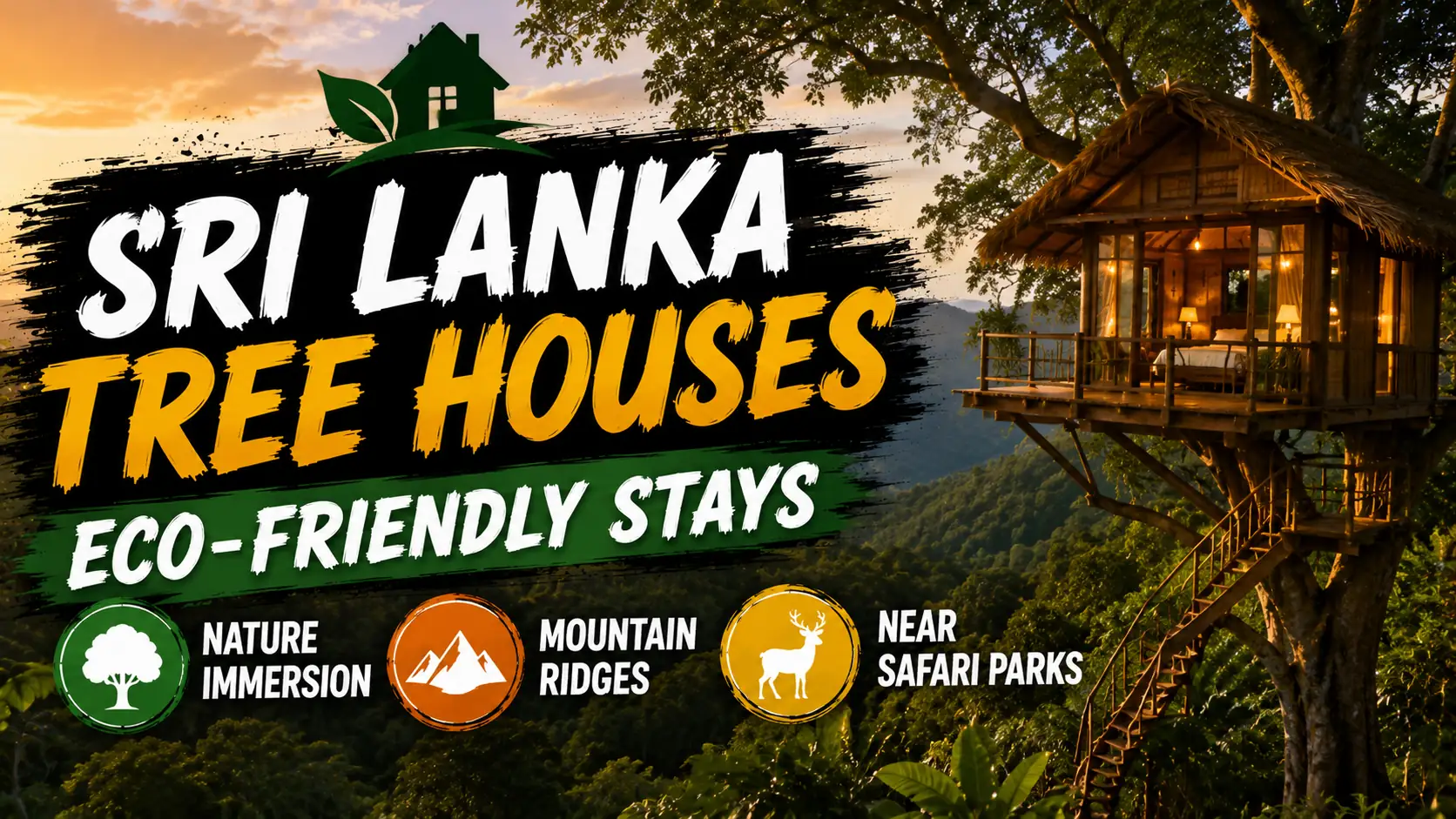
Sri Lanka Tree Houses: Eco-Friendly Stays from Safari Parks to Mountain Ridges
Sri Lanka offers a spectacular variety of tree house stays, from rustic wilderness escapes near safari parks to luxurious chalets tucked into mountain ridges. For travellers who want more than an ordinary hotel room, a tree house stay brings the island closer: tropical bird calls at sunrise, leaves moving in the night wind, monkeys passing through branches, mist above tea plantations, and distant views of rocks, lakes or jungle.

The best tree house experiences in Sri Lanka are not all the same. Some are simple wooden platforms built for adventure lovers. Some are romantic eco-lodges with open-air bathrooms, mosquito nets and forest sounds. Others are high-end chalets with plunge pools, mountain views and polished service. What connects them is the feeling of being lifted above the ground and placed inside nature rather than beside it.
Why Choose a Tree House in Sri Lanka?
A tree house changes the rhythm of travel. Instead of waking to traffic, you may wake to bulbuls, barbets, peacocks, squirrels or the soft rustle of palms. In the dry-zone forests near Sigiriya, Wilpattu and Yala, the morning air is often filled with bird calls and the distant sounds of village life. In the hill country, the experience becomes cooler and mistier, with views of tea estates, forest gardens and mountain ridges.
Tree houses also suit Sri Lanka's landscape because the island is compact but diverse. Within a few hours, travellers can move from wildlife parks to ancient cities, from rainforest edges to tea country, and from beaches to highland valleys. This means a tree house stay can be built into many different itineraries: a safari holiday, a romantic escape, a family nature break, a wellness retreat or a photography journey.
Rustic Wilderness Escapes Near Safari Parks
For wildlife lovers, the most exciting tree house stays are near national parks. Wilpattu, Yala, Udawalawe and Minneriya areas are especially attractive because travellers can combine elevated accommodation with early morning or evening safaris. A tree house near Wilpattu may offer forest views and a strong sense of remoteness, while the Yala and Tissamaharama areas are popular for travellers hoping to see elephants, peacocks, crocodiles and, with luck, leopards.
These wilderness stays are best for people who enjoy nature sounds and do not need a city-style hotel environment. Some places are rustic, with simple rooms, fans, nets and open verandas. Others offer more comfort while still keeping a jungle atmosphere. The magic is in the transition from safari jeep to quiet balcony: after a dusty drive through the park, sitting above the ground with a cup of tea feels peaceful and unforgettable.

Sigiriya and the Cultural Triangle
Sigiriya is one of the best areas for a first tree house stay in Sri Lanka. The landscape around Sigiriya and Dambulla combines dry-zone forest, lakes, village paths, ancient ruins and the famous Lion Rock. Some eco-lodges in this region place guests among trees or close to paddy fields, giving easy access to Sigiriya Rock Fortress, Pidurangala Rock, Dambulla Cave Temple and Minneriya or Kaudulla elephant safaris.
This region works well for families and first-time visitors because it offers both comfort and adventure. A guest can climb Pidurangala for sunrise, visit Sigiriya, return to a shaded tree house for a rest, and then go out again for a village meal or evening wildlife drive. The setting feels rural, but the travel connections are practical.
Mountain-Ridge Luxury in Belihuloya and the Hill Country
Sri Lanka's hill country offers a different kind of tree house experience. Around Belihuloya, Ella, Haputale and nearby mountain regions, the air is cooler and the views are softer. Instead of dry forest and safari tracks, travellers find waterfalls, hiking trails, tea gardens, pine slopes, village farms and mist rolling across valleys. Treehouse-style chalets in these areas may be more luxurious, with polished wooden interiors, open decks, spa-style bathrooms and private views.
Belihuloya is especially suitable for travellers who want a nature retreat between the central hills and the south. The area is known for rivers, waterfalls, hiking and quiet village landscapes. Ella is more famous and busier, but treehouse-style stays around Ella can still offer mountain views, cooking classes, nature walks and easy access to trails such as Little Adam's Peak, Ella Rock and Nine Arches Bridge.
Rainforest and Tea-Estate Tree Houses
Travellers who want a greener, wetter atmosphere can look toward rainforest-edge and plantation regions. Near Sinharaja and parts of the southwest, tree house stays may be surrounded by rubber, cinnamon, tea, palms and dense forest. The experience here is less about big animals and more about birds, butterflies, rain sounds, frogs, streams and slow walks through green land.
These stays suit travellers looking for calm rather than activity. A simple tree house near a rainforest can become a natural therapy space: reading on a veranda, listening to rain on leaves, watching mist rise after a shower and eating home-cooked Sri Lankan meals. Photographers and birdwatchers often enjoy these regions because the light, humidity and vegetation create a very different feeling from the dry-zone national parks.
Southern Coast and Family-Friendly Tree Houses
Sri Lanka's southern coast also has treehouse-style stays, especially around Matara, Weligama, Ahangama and inland villages behind the beaches. These are useful for travellers who want a mix of beach life and jungle atmosphere. A family may spend the morning surfing or swimming, return to a leafy tree house for rest, and enjoy local rice and curry or seafood in the evening.
Coastal tree houses are often less remote than safari lodges, which makes them easier for travellers who want restaurants, shops and transport nearby. They can be a good choice for families, digital nomads or visitors who want something more characterful than a standard guesthouse while still staying close to beach activities.
Eco-Friendly Travel and What to Check Before Booking
The phrase eco-friendly can mean many things, so travellers should ask practical questions before booking. Does the property reduce plastic? Does it treat wastewater carefully? Is local labour used fairly? Are meals based on local produce? Does the building respect trees instead of damaging them? Is wildlife observed quietly rather than fed or disturbed? A beautiful tree house should protect the environment that makes it special.
Comfort also varies widely. Some tree houses have air conditioning, hot water, strong Wi-Fi and restaurant service. Others are intentionally simple, with fans, mosquito nets, open-air showers and limited electricity. Neither style is wrong, but travellers should match the stay to their expectations. A honeymoon couple may want privacy and luxury, while an adventure traveller may prefer rustic charm and lower cost.
Safety is important too. Check staircases, railings, lighting, insect protection and access during rain. Families with small children should choose carefully because high platforms and open decks may not suit toddlers. Older travellers should ask about steps, distance from parking and night access. During the monsoon or heavy rain, paths can become slippery, so a flashlight and sensible footwear are useful.
Best Time for a Tree House Stay
Sri Lanka has regional weather patterns, so the best time depends on where you stay. For the south and west, December to March is often popular. For the east coast and some dry-zone areas, May to September can be attractive. Safari regions vary by park and season, but early morning and late afternoon are usually best for wildlife drives. Hill-country tree houses can be cool and misty at any time, so a light jacket is wise.
Rain is not always a problem. In fact, some tree house stays become more beautiful after rain, when leaves shine, birds become active and the air turns fresh. The key is choosing a property that handles wet weather well, with safe paths, good roofing and comfortable indoor space.
Who Will Love Sri Lanka Tree Houses?
Tree houses are ideal for couples seeking romance, families wanting a memorable nature stay, photographers looking for atmosphere, safari travellers wanting a jungle base, and wellness travellers seeking quiet. They are also excellent for visitors who have already stayed in normal hotels and want something more personal. The best guests are those who enjoy nature respectfully and understand that insects, bird calls and changing weather are part of the experience.
Sri Lanka's tree houses show the island at its most intimate. They let travellers sleep closer to the forest, watch the morning light through leaves and feel the landscape instead of just visiting it. Whether you choose a rustic safari tree house near Wilpattu, a Sigiriya eco-lodge, a Belihuloya mountain chalet, a rainforest retreat or a southern coastal hideaway, the reward is the same: a slower, greener and more memorable way to experience Sri Lanka.


Loading comments…