


How Elephants Are Cared for at Pinnawala Elephant Orphanage: Feeding, River Bathing, Love and Motherly Protection
Last reviewed: June 15, 2026
Pinnawala Elephant Orphanage is one of the best-known places in Sri Lanka for observing Asian elephants at close range. Located at Pinnawala near Rambukkana in the Kegalle District, it is managed under the Department of National Zoological Gardens. The official National Zoological Gardens page describes Pinnawala as a wildlife conservation and animal-care center connected with the rescue, rehabilitation and protection of orphaned, injured and abandoned elephants. For visitors, the most memorable sights are usually feeding time, the walk to the river, and the calm beauty of elephants bathing together.
The beauty of Pinnawala is not only in seeing a large elephant herd. It is also in watching daily care: keepers guiding animals patiently, young elephants being fed, older elephants moving slowly to the water, and the herd showing social behavior. Elephants are intelligent, sensitive and powerful animals. Proper care means food, water, space, medical attention, routine, experienced handlers and respectful distance from visitors. Love for elephants should never mean treating them like pets. It means understanding their needs and protecting their dignity.
A Place Built Around Elephant Care
Pinnawala was established in 1975 and became famous because of its large herd of captive elephants. Visitor information sources describe the orphanage as a home for elephants that needed human-managed care, including young animals, injured animals and elephants that could not simply be returned to the wild. Over time, Pinnawala also became known for captive breeding and for giving visitors a chance to learn about Sri Lanka's elephant heritage.
The orphanage is close to the Maha Oya River, and that river is central to the daily routine. Elephants need large amounts of water for drinking, cooling, skin care and play. The river bath is therefore not only a tourist attraction; it is part of the elephants' health and comfort. In Sri Lanka's warm climate, a long bath helps cool the body, wash dust from the skin and give the herd time to relax socially.
How the Elephants Are Fed
Feeding is one of the most important parts of elephant care at Pinnawala. Adult elephants eat a large quantity of plant food each day. Visitor information commonly describes their diet as green matter such as grass, leaves, branches, palm leaves, jack leaves, kitul, coconut leaves and other fibrous vegetation, with supplementary food prepared under the care routine. Some sources mention food bags with items such as rice bran and maize, while young elephants may receive bottle feeding at scheduled times.
Because elephants are herbivores with huge bodies and long digestive systems, feeding is not a quick act. It is a full routine. Keepers must make sure food is clean, suitable and given in the correct amount. Young elephants need special attention because they may not be able to feed like adults. Bottle feeding is one of the emotional moments visitors often want to see, but it should be understood as care, not entertainment. A young elephant receiving milk is like a child receiving nourishment.
Public visitor schedules list bottle-feeding times around morning, early afternoon and late afternoon, while opening hours and daily routines may change. Anyone planning a visit should check the official Pinnawala or National Zoological Gardens information before travel. The important thing is that feeding is organized around the elephants' needs first, and visitor viewing second.
The Walk to the River for Bathing
The walk to the river is one of the most famous scenes at Pinnawala. At scheduled times, the elephants are guided from the orphanage area toward the Maha Oya. The herd moves along the route with keepers nearby, while visitors watch from safe places. The movement is slow, heavy and graceful. Large feet touch the road, trunks swing gently, and younger elephants often stay close to older animals.
Visitor timetables often mention the herd leaving for the river around 10:00 a.m. and again around 2:00 p.m., returning later in the day. These times should be treated as guidance, because animal care, weather, river condition and management decisions can change the schedule. When the elephants reach the river, the atmosphere becomes calmer. Some stand in the water, some lie down, some splash, some rub their bodies with their trunks, and some seem simply to enjoy the coolness.
Why River Bathing Matters
Bathing is important for elephant health. Elephants do not sweat like humans, so water and mud help them regulate body temperature. A bath can also soften the skin, remove dirt and give keepers a chance to observe the body closely. If an elephant has wounds, skin irritation, foot problems or unusual behavior, experienced staff can notice changes during daily routines.
Bathing also supports social behavior. Elephants are herd animals. They communicate through touch, low sounds, trunk movements and body position. In the water, younger elephants learn by watching older ones. Older animals may stand calmly while calves move around them. Some elephants splash playfully, while others prefer to stay quiet. This variety is part of their individuality.
Mother Elephant Protection During Bathing
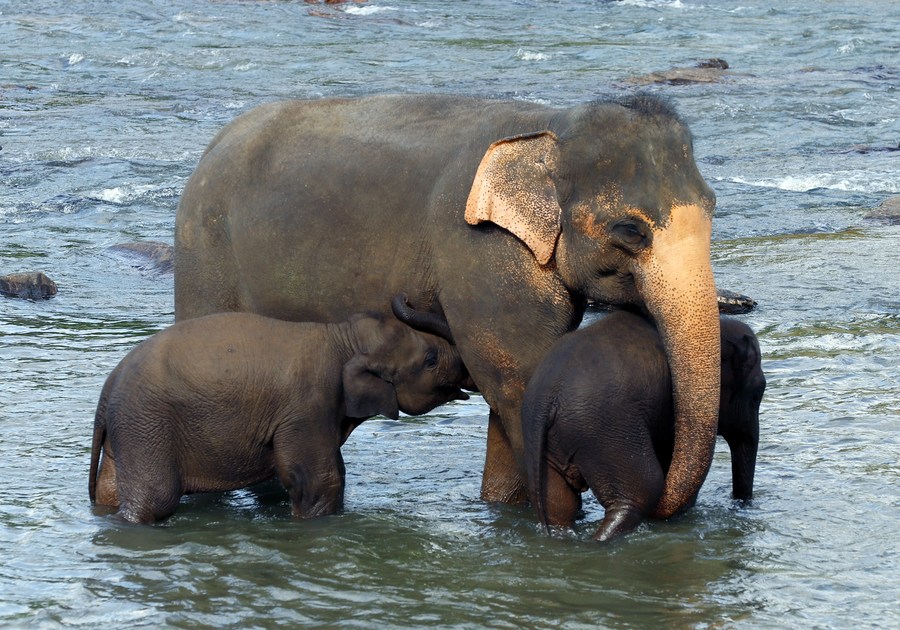
One of the most touching sights at an elephant bathing place is the protection shown by a mother elephant or an older female. In elephant herds, calves are not left alone carelessly. A mother often keeps her baby close to her body, especially near water, crowds or unfamiliar movement. Other female elephants may also act protectively, forming a kind of gentle living wall around a young one.
During bathing, a mother elephant may guide the calf toward shallow water, stand between the calf and deeper current, touch the young elephant with her trunk, or use her body position to keep the calf near the herd. If the calf becomes too playful, moves too far, or seems uncertain, the mother may bring it back with a trunk touch or by stepping close. This behavior is one of the best examples of elephant intelligence and emotional life.
Visitors sometimes see only the cuteness of a baby elephant, but the deeper beauty is the care system around that baby. The mother watches. The herd watches. The keepers watch. Protection comes from both natural elephant behavior and human supervision. That combination is what makes bathing time safe and meaningful.
Care With Love and Discipline
People often speak about caring for elephants with love. At Pinnawala, love should be understood as patient, practical care. It is in preparing food every day, cleaning spaces, guiding elephants safely, arranging bathing routines, observing health, calling veterinary help when needed, and preventing visitors from disturbing the animals. Love is also discipline: keeping distance, following rules, and not feeding elephants random food.
Mahouts and keepers play a central role. They know individual elephants, their habits, moods and daily needs. A good keeper must be alert, calm and experienced, because elephants are strong animals and small mistakes can be dangerous. The relationship between keeper and elephant is built through routine, voice, movement and trust over time.
Veterinary care is also important. Elephants may need foot care, skin treatment, nutrition monitoring, wound care, reproductive care and special attention as they age. A visitor may see only the beautiful bath, but behind that moment is a full system of daily management.
How Visitors Can Show Real Love
The best way for visitors to show love for the elephants is to behave respectfully. Do not shout at elephants to make them look at the camera. Do not tease them. Do not cross barriers. Do not feed them unless staff clearly allow it. Do not use flash or crowd close to calves. Let the animals move, eat and bathe without stress.
Responsible visitors should also understand that captive elephant tourism is discussed seriously by animal-welfare groups around the world. Some people love Pinnawala because it cares for elephants that needed help. Others worry about any system where elephants live under human control. A balanced visitor can appreciate the care being given while still asking for high welfare standards, kindness, space, veterinary attention and respectful management.
The Beauty of Pinnawala
The beauty of Pinnawala Elephant Orphanage is a mixture of strength and tenderness. A huge elephant taking food from a keeper's hand, a young elephant drinking milk, a herd walking together to the river, a mother protecting a calf in shallow water, and old elephants standing quietly in the stream all show different sides of elephant life.
It is also a reminder of Sri Lanka's responsibility. The Asian elephant is part of the island's identity, history, religion, forest life and village memory. Caring for elephants means more than keeping them alive. It means respecting their intelligence, protecting their welfare and teaching future generations that these animals deserve patience and dignity.
Final Thoughts
Pinnawala Elephant Orphanage offers visitors a rare chance to observe feeding, bathing and herd behavior in one place. The feeding routine shows the practical work of care. The river bath shows comfort, cooling and social life. The mother elephant protecting a calf shows emotional depth and family instinct. Together, these scenes create a powerful message: elephants are not only large animals to admire, but living beings that need food, water, safety, love and respect.
If you visit Pinnawala, go with a quiet heart. Watch the elephants eat, walk and bathe. Notice the keepers, the mothers, the calves and the river. The real beauty is not only in the photograph you take, but in the care you learn to see.



Loading comments…