


Sithawaka Botanical Garden Day Trip: Calm Views, Weather, Butterflies, Local Food and the Kelani River
Last reviewed: June 12, 2026
Sithawaka Botanical Garden is one of the most peaceful green escapes near Colombo for travelers who want mountain air, wet-zone forest scenery, slow walking paths and a softer kind of Sri Lankan day trip. If you are searching for a calm place near Colombo with garden views, butterflies, local food stops and the Kelani River close enough to include in the same outing, this guide gives you a practical plan.
The garden is commonly associated with the Avissawella area, east of Colombo, and is best treated as a half-day or full-day nature break rather than a rushed roadside stop. The main reward is not a single viewpoint. It is the feeling of moving through layered greenery: palms, wet-zone trees, flowering plants, water, slopes, misty light after rain and quiet corners where you naturally slow down.
Why Sithawaka Botanical Garden Is Worth Visiting Near Colombo
For many visitors, the biggest reason to choose Sithawaka Botanical Garden is balance. It is close enough to Colombo for a day trip, but the mood feels very different from the city. The route toward Avissawella gradually changes from busy suburbs into greener roads, rubber lands, village shops, river crossings and hill-country hints. That transition is part of the experience.
Inside the garden, the beauty is gentle rather than dramatic. You come for calm views, fresh air, shaded walking, photography, a quiet couple's walk, a family nature outing or a slow solo reset. It suits visitors who do not want the long drive to Kandy or Nuwara Eliya but still want a garden landscape with a cooler, greener feeling than central Colombo.
Best Things to Enjoy: Views, Calm Walks and Garden Beauty
Plan to walk slowly. The garden is most enjoyable when you let the paths set the pace. Look for changes in texture: glossy wet leaves, tall tree trunks, open lawns, flowering borders, water reflections and the soft haze that often appears after a shower. If you enjoy photography, the best images usually come from patient observation rather than quick snapshots.
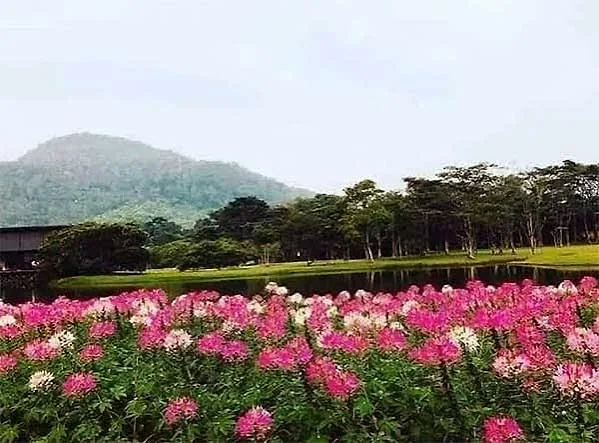
Good subjects include close-up flowers, curved paths, tree canopies, reflections, resting benches and wide garden views with the surrounding wet-zone landscape in the background. Early morning light is usually kinder for photos, while late afternoon can feel romantic and cooler. Midday can still be pleasant if there is cloud cover, but the light may be flatter and the humidity stronger.
Sithawaka Botanical Garden Weather: What to Expect
This part of Sri Lanka belongs to the wetter, greener side of the island, so visitors should prepare for humidity and possible rain even when the morning looks clear. The most useful travel mindset is simple: dress for warmth, pack for rain, and welcome the mist if it arrives.
Light clothing, comfortable walking shoes, a small umbrella or rain jacket, drinking water and a waterproof pouch for phones or camera gear are sensible. After rain, the garden can look especially beautiful because leaves shine, colors deepen and the air feels cooler. The tradeoff is that some paths may be slippery, so avoid rushing and choose footwear with grip.
If you are visiting with children or elderly travelers, avoid the hottest part of the day when possible. A morning arrival gives you more flexibility: you can walk before the strongest heat, take a food break near Avissawella and still have time for a Kelani River viewpoint or a slow drive back toward Colombo.
Butterflies and Small Wildlife: How to Watch Gently
Sithawaka Botanical Garden is a good place to notice small life: butterflies moving between flowers, dragonflies near water, birds in the canopy and insects around shaded plants. Butterfly activity is usually better when there is sunshine after rain, because warmth encourages movement and flowers become lively feeding spots.
The best approach is quiet observation. Walk slowly near flowering areas, stand still for a minute, and let butterflies come into view naturally. Avoid touching plants unnecessarily, chasing butterflies for photos or blocking paths for other visitors. A phone camera with patience often gives better results than a hurried close approach.
Families can turn this into a simple nature lesson. Ask children to notice colors, wing patterns, flower shapes and how butterflies choose places to rest. That kind of gentle attention matches the spirit of the garden better than treating wildlife as a checklist.
Adding the Kelani River to the Same Day Trip
The Kelani River is one of the important natural features of the wider Colombo and Avissawella region, and it can add a beautiful second mood to the day. The garden gives you planted, curated calm; the river gives you movement, history, local life and open water views.
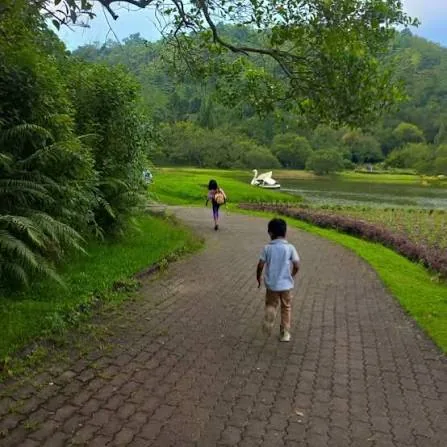
You do not need to force a complicated itinerary. After visiting the garden, continue toward safe public viewpoints, bridges or roadside areas where the Kelani River can be seen without trespassing or stopping dangerously. The best river stop is one where you can park safely, keep children away from the edge and enjoy the view without disturbing local residents.
Do not enter the river casually, especially after rain. Water levels, currents and banks can change quickly. For most visitors, the better experience is a quiet look, a few photographs and perhaps a tea or king coconut stop nearby before heading back.
Local Foods to Try Around Avissawella and the Garden Route
A Sithawaka Botanical Garden day trip becomes more memorable when you include simple local food. Around Avissawella, Kosgama, Hanwella and the road back toward Colombo, travelers can usually find small restaurants, bakeries, tea shops and roadside fruit sellers. Current opening hours and quality can change, so it is wise to check recent reviews or call before depending on a specific restaurant.
For breakfast, look for string hoppers with dhal and coconut sambol, egg hoppers, plain hoppers or fresh bakery items with milk tea. For lunch, rice and curry is the natural choice: vegetables, dhal, mallung, fish or chicken curry and a little pickle make a satisfying meal after walking. If you prefer something quick, kottu, fried rice or short eats are easy to find in town areas.
For a light roadside refreshment, king coconut is almost perfect for this route. It is cooling, local and easy to enjoy without turning the day into a heavy meal. Fresh bananas, pineapple, mango in season or a simple cup of plain tea also fit the mood.
Nearby Restaurants: How to Choose Without Losing the Calm
The best restaurant choice depends on your route, budget and timing. Instead of chasing only the closest place to the garden gate, think in zones. If you want convenience, eat in Avissawella town before or after the garden. If you want a quieter return journey, stop at a clean roadside restaurant between Avissawella, Kosgama, Hanwella and Colombo. If you are traveling with family, choose a place with parking, washrooms and simple food options for children.
Before you sit down, check three things: whether food is freshly served, whether the dining area looks clean and whether the menu suits your group. For a calm nature trip, a simple, clean rice-and-curry lunch often feels better than a long restaurant hunt. If you have dietary needs, ask clearly before ordering because local curries may include fish, Maldive fish, coconut milk, egg or chili even when the dish looks simple.
A Simple Day Trip Plan from Colombo
Start from Colombo after breakfast or leave early and eat on the way. Aim to reach the garden in the morning, especially if you want cooler walking and better butterfly activity. Spend two to three hours inside the garden, allowing time for photos, rest stops and unplanned slow moments.
After the garden, take lunch in or near Avissawella. Then add a short Kelani River viewpoint stop if weather and time are suitable. Return toward Colombo before late evening traffic becomes tiring. This plan keeps the day relaxed and avoids the common mistake of packing too many stops into a nature outing.
What to Bring
- Comfortable walking shoes with grip for damp paths.
- Umbrella or light rain jacket for sudden showers.
- Water bottle, hat and sunscreen for humid sunny periods.
- Small towel or tissues after rain.
- Phone or camera with enough battery for garden and river photos.
- Cash for small food shops, fruit sellers or local parking needs.
Who Will Enjoy This Trip Most?
This trip is ideal for couples, families, photographers, garden lovers, butterfly watchers and anyone in Colombo who wants a refreshing green day without traveling deep into the hill country. It is also a good soft adventure for visitors who prefer nature, views and local food over crowded tourist attractions.
It may not suit travelers looking for nightlife, luxury dining, fast entertainment or a highly structured guided attraction. Sithawaka Botanical Garden rewards patience. The charm is in shade, rain-cooled air, leaves, small wildlife and the feeling that the city has loosened its grip for a few hours.
Final Thoughts
A Sithawaka Botanical Garden day trip is one of the easiest ways to enjoy Sri Lanka's quiet wet-zone beauty near Colombo. Go for the calm garden views, stay alert for butterflies, prepare for changing weather, eat simple local food around Avissawella and add the Kelani River only if it keeps the day relaxed. The best version of this trip is not hurried. It is slow, green and gently memorable.
Colombo to Sithawaka
How to get from the city to the wet-zone hills of Seethawaka Botanical Garden — by bus, by car, or by train and tuk — and what to expect once you arrive.
The whole journey follows a single road out of the city: the Avissawella Road (A4), which climbs gently from Colombo's coastal flatness into the wet, green folds of the Sabaragamuwa foothills. Seethawaka Botanical Garden — often written Sithawaka — sits just past Avissawella, along the Puwakpitiya–Thummodara Road in Ilukovita.
01Getting there
There's no single "correct" way to make the trip — it depends on whether you'd rather save money, save time, or enjoy the ride.
Slow, cheap, and scenic
- Board at Colombo Bastian Mawatha / Fort bus terminal, or catch route 138 towards Avissawella.
- Get off at Avissawella town, then take a short tuk-tuk (10–15 min) to the garden entrance.
- Direct long-distance services also run twice daily straight to Avissawella.
Fastest, door to door
- Follow the A4 Avissawella Road the entire way — it's well signposted from Colombo.
- Pass through Watareka, Padukka, and Labugama before reaching Avissawella.
- Turn onto the Puwakpitiya–Thummodara Road near Puwakpitiya Railway Station and continue about 6 km.
02Landmarks along the way
Because the whole route is one road, it's easy to track progress by the towns you pass. Use this as a rough checklist from the back seat, or the bus window:
- Watareka
First stretch out of the city; traffic usually thins here. - Padukka
A good coffee or short-eats stop before the road starts climbing. - Labugama
You'll pass near the Labugama reservoir — the air noticeably cools and greens up here. - Avissawella
The junction town. If you came by bus, this is where you switch to a tuk-tuk. - Puwakpitiya Railway Station turn-off
Turn onto Puwakpitiya–Thummodara Road; the garden is roughly 6 km further. - Sithawaka Botanical Garden, Ilukovita
Entrance on your right, tucked against the Indikada Mukalana Forest Reserve.
03What to expect once inside
The garden was opened to the public in 2014 and is administered by Sri Lanka's Department of National Botanic Gardens as both a public space and a research site for threatened plant species from the nearby Sinharaja Forest region. It spans roughly 105 acres across two distinct halves.
The lower section is manicured — trimmed lawns, flower beds, and a lake where paddle boats are available. The upper section is a forested hillside with a longer, steeper walking path leading toward a summit viewpoint over the surrounding wet-zone landscape. A well-paved path handles most of the climb, and an electric golf cart can be hired at the entrance if you'd rather ride than walk.
04Practical tips
- →Wear shoes with real grip — paths can turn slippery after rain, particularly on the upper hill section.
- →Pack a light rain jacket or umbrella; this is genuinely wet-zone forest, and showers can arrive without much warning.
- →Bring a waterproof pouch for your phone or camera if you're visiting in the rainier months.
- →Food is available on-site, but many visitors prefer to break for local short eats in Avissawella on the way in or out.
- →If traveling with children or older relatives, aim for a morning arrival — the heat builds noticeably by early afternoon.
- →Consider pairing the visit with a stop at a Kelani River viewpoint on the return leg, since it sits along the same general route back toward Colombo.



Loading comments…