


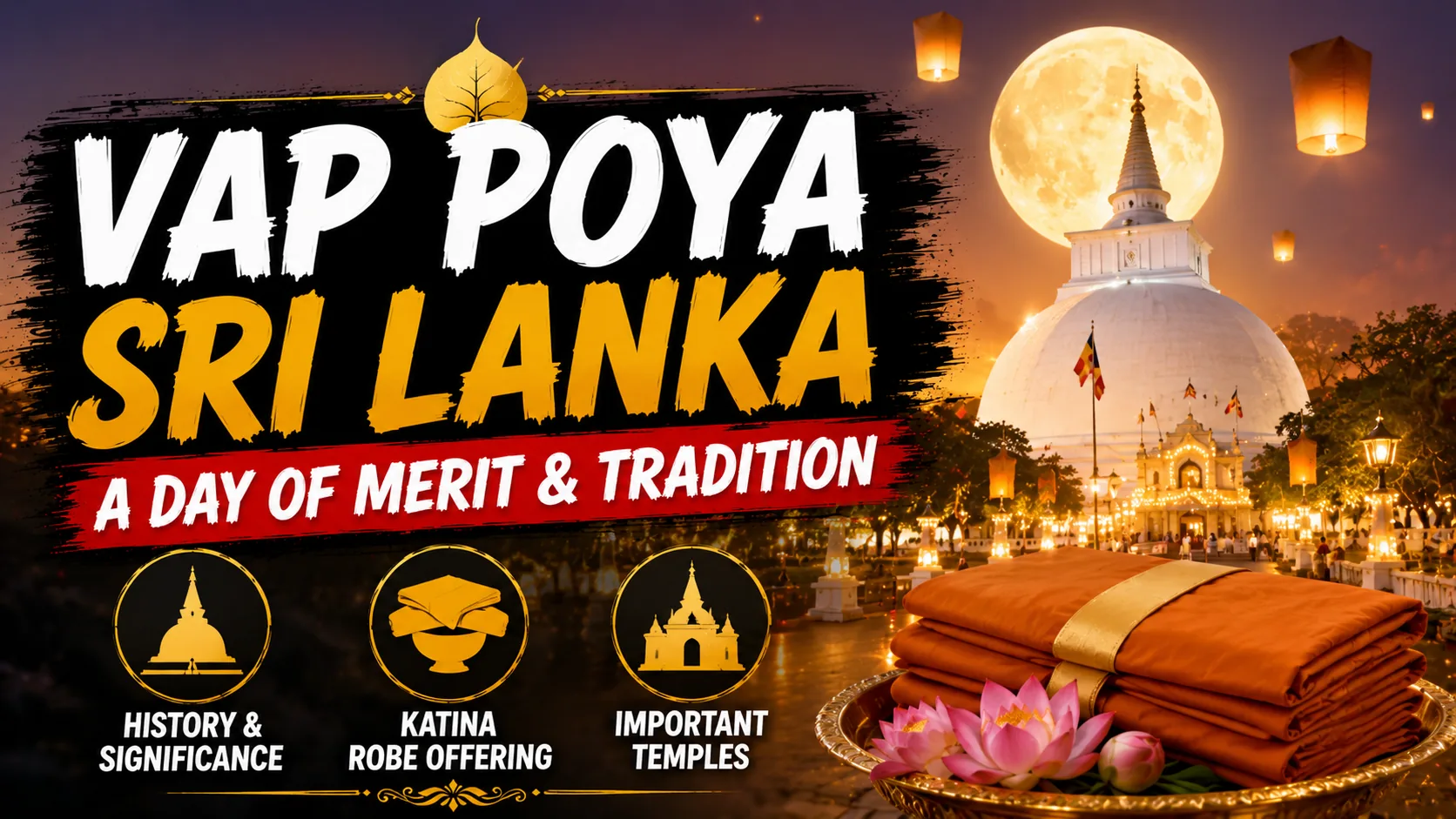
Vap Poya in Sri Lanka: History, Katina Robe Offerings and Important Temples
Vap Poya is one of the most spiritually important full moon days in the Sri Lankan Buddhist calendar. Celebrated annually in October, it marks the conclusion of the three-month Vassana, or rainy season retreat, observed by Buddhist monks. It also begins the Katina Cheevara Masaya, the sacred month of robe offerings. For devotees, Vap Poya is a time of gratitude, discipline, generosity and renewal after months of temple life, Dhamma practice and lay support.

In 2026, Vap Full Moon Poya Day in Sri Lanka falls on Sunday, 25 October. In 2025, it was observed on Monday, 6 October. Like all Poya days, Vap Poya is a public holiday in Sri Lanka and a day when many Buddhists visit temples, observe sil, listen to sermons, offer dana and take part in merit-making activities. The atmosphere is quieter than a tourist festival, but it is deeply moving for anyone who wants to understand Sri Lanka's Buddhist heritage.
The Meaning of Vap Poya
The word Vap is connected with the lunar month that usually falls in October. In the Buddhist monastic calendar, its importance comes from the ending of Vassana. During Vassana, monks traditionally remain in one monastery instead of travelling from place to place. This rainy-season retreat allows them to deepen meditation, study, discipline and community practice. Lay devotees support the monastery by offering food, medicine, robes and other necessities.
When Vap Poya arrives, the retreat reaches its formal conclusion. The monks who have completed the Vassana period become eligible to receive the Katina robe offering. This is not an ordinary gift. The Katina Cheevara is considered one of the most meritorious offerings a lay Buddhist can make, because it is connected with discipline, patience and the shared effort of the whole community.
Katina Cheevara Masaya: The Month of Robe Offerings
The month following Vap Poya is known as Katina Masaya or Cheevara Masaya, the month of robes. During this period, temples across Sri Lanka conduct Katina Pinkama ceremonies. Devotees prepare a robe or robe cloth, often carry it in a small procession, and offer it to the Sangha with flowers, lamps, chanting and dana. In many villages, the Katina procession begins before dawn, with drummers, white-clad devotees and families walking together toward the temple.
The beauty of Katina is not only in the cloth itself. It is in the unity of the community. One person may sponsor the robe, another may arrange dana, another may decorate the temple, and many others may help with lamps, flowers, cleaning and chanting. For a village temple, Katina can be the most important annual event after Vesak. It brings together elders, children, monks, lay leaders and neighbours in a shared act of merit.
Historical Importance of Vap Poya
Several important Buddhist events are traditionally associated with Vap Poya. One widely remembered event is the Buddha's descent from the Tavatimsa heaven after preaching the Abhidhamma to the devas, including his mother who had been reborn there. This story gives Vap Poya a strong connection with gratitude, wisdom and the sharing of deep Dhamma teachings.
Vap Poya is also remembered for the declaration of Arahat Sariputta as the Buddha's foremost disciple in wisdom. Sariputta Thero is honoured in Buddhist tradition for his extraordinary understanding, clarity and ability to teach the Dhamma. Remembering this on Vap Poya encourages devotees to value wisdom together with devotion.
Another important tradition says that the future Maitreya Buddha, then still a Bodhisattva, entered the monastic order on a Vap Poya day with 500 followers. This event connects Vap Poya not only with the past of the Buddha Sasana, but also with the future hope of Buddhism. The idea of Maitreya reminds Buddhists that compassion, patience and spiritual aspiration continue across ages.
In Sri Lankan Buddhist history, Vap Poya is also associated with events after the arrival of Arahat Mahinda Thero, including Vinaya Sangha ceremonies at Thuparama and the request made by King Devanampiyatissa to Emperor Asoka for Sanghamitta Theri to come to Sri Lanka and establish the Bhikkhuni Sasana. These traditions make Vap Poya especially meaningful for those who study the growth of Buddhism in the island.
How Devotees Observe Vap Poya
On Vap Poya morning, many devotees wear white and visit the temple early. Some observe Atasil or Dasasil, spending the day in meditation, chanting, sermons and quiet reflection. Others offer dana to monks, light oil lamps, offer flowers at the Bodhi tree and join in temple cleaning or preparation for the coming Katina ceremony. The day is not about noise or display. Its beauty is found in simplicity, discipline and generosity.
Families may teach children the meaning of Vassana and Katina, explaining why monks stayed in one temple during the rains and why robe offerings are made afterward. In this way, Vap Poya becomes a bridge between monastic discipline and lay devotion. It teaches that the Sasana is protected not only by monks, but also by supportive lay communities.
Important Temples to Visit on Vap Poya
For travellers and devotees, Anuradhapura is one of the most important places to experience Vap Poya. The sacred city includes Sri Maha Bodhi, Ruwanwelisaya, Thuparamaya, Abhayagiriya and Jetavanaramaya. Thuparamaya is especially meaningful because of its connection with the early establishment of Buddhism in Sri Lanka. On a Poya day, the sight of white-clad devotees walking between stupas and Bodhi trees creates a powerful sense of history.
Kandy's Sri Dalada Maligawa is another deeply significant place. The Temple of the Sacred Tooth Relic is central to Sri Lankan Buddhist devotion, and visiting on Vap Poya allows travellers to feel the rhythm of daily worship, offerings and chanting. Kandy also has many surrounding temples where Katina activities may be held during the robe-offering month.
Kelaniya Raja Maha Viharaya near Colombo is a strong choice for visitors staying in the capital. It is easy to reach, historically respected and active on Poya days. The murals, stupa, Bodhi tree and riverside atmosphere make it a meaningful place for those who want a spiritual visit without travelling far from Colombo.
Gangaramaya Temple in Colombo is also practical for travellers. It combines temple worship, Buddhist learning, a museum-like collection and easy city access. On Poya days, it can be busy with devotees, but it remains one of the best-known urban temples for visitors who want to understand Buddhism in modern Colombo.
Dambulla Cave Temple, with its ancient murals and Buddha statues, gives Vap Poya a different atmosphere. The climb, caves and painted interiors remind visitors that Sri Lankan Buddhist devotion has been preserved through art, architecture and royal patronage. For those travelling between Sigiriya, Habarana and Kandy, Dambulla is an excellent temple stop.
Mihintale is another powerful place, especially for those interested in the arrival of Buddhism in Sri Lanka. Though Poson is Mihintale's most famous season, Vap Poya is still a meaningful day to climb the steps, observe the landscape and remember Arahat Mahinda's role in the island's Buddhist history.
Visitor Etiquette on Vap Poya
Visitors are welcome at many temples, but modesty and quiet behaviour are essential. Wear white or light-coloured modest clothing if possible. Cover shoulders and knees, remove hats and shoes where required, and avoid loud conversations. Do not pose disrespectfully with Buddha statues, do not turn sacred spaces into photo backdrops and always ask before photographing monks or devotees.
Because Vap Poya is a public holiday, alcohol sales are restricted and many businesses may close or operate differently. Plan transport, meals and cash in advance. If you attend a Katina procession or robe offering, stand aside respectfully, follow local guidance and remember that this is a sacred merit-making ceremony, not a performance.
Why Vap Poya Still Matters
Vap Poya matters because it reminds Sri Lanka of the relationship between discipline and generosity. Monks spend the rains in retreat, and lay devotees support them with faith. When the retreat ends, the Katina robe offering expresses gratitude for the Sangha and confidence in the Dhamma. The day links the Buddha's teachings, the wisdom of Arahat Sariputta, the future hope of Maitreya Bodhisattva and the living temple traditions of Sri Lanka.
For travellers, Vap Poya is not a day of spectacle but a day of quiet beauty. Visit a temple respectfully, watch the lamps, listen to chanting, observe the white-clad devotees and notice how generosity holds the Buddhist community together. In that calm rhythm, Vap Poya reveals one of Sri Lanka's most enduring spiritual strengths.



Loading comments…