


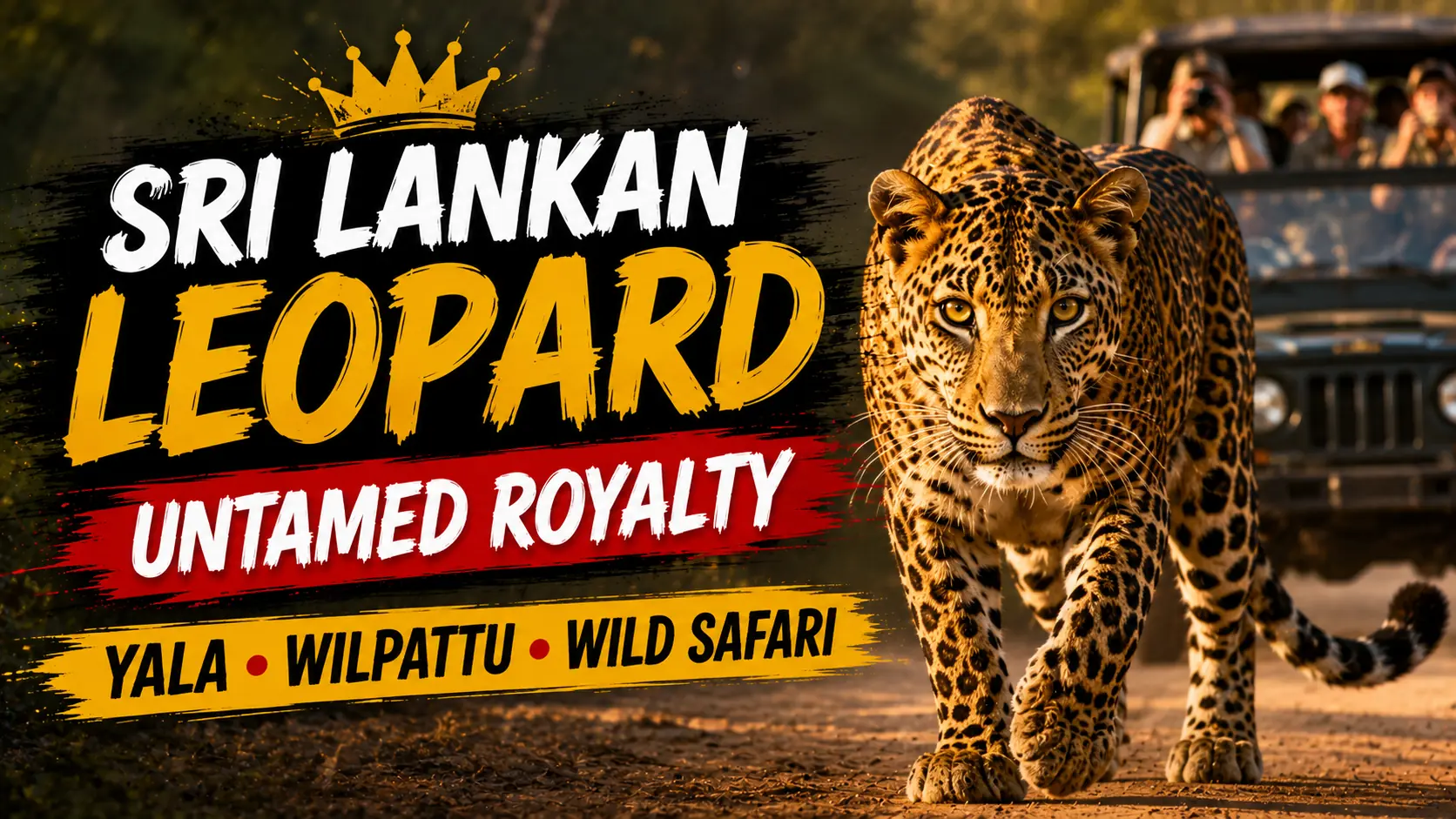
The Untamed Royalty of Sri Lanka: Sri Lankan Leopard Safaris in Yala and Wilpattu
Deep inside the sun-dappled jungles of Sri Lanka, one animal carries the feeling of wild royalty more than any other. The Sri Lankan leopard, known scientifically as Panthera pardus kotiya, moves through forest, scrubland, rocky outcrops and dry-zone shadows with breathtaking grace. To lock eyes with this apex predator during a safari is one of the most powerful wildlife moments the island can offer.
Sri Lanka is home to its own leopard subspecies, found nowhere else in the world. Unlike parts of Asia where leopards share the landscape with tigers or lions, Sri Lanka has no larger wild cat competing above them. This makes the leopard the top predator of the island's forests. It hunts quietly, rests in shade, patrols territory and appears only when the jungle allows it. That mystery is exactly why a leopard sighting feels so unforgettable.
A Unique Island Predator
The Sri Lankan leopard was described as a distinct subspecies by Sri Lankan zoologist P. E. P. Deraniyagala in the twentieth century. Its coat is usually tawny to rusty yellow, marked with dark spots and rosettes that melt beautifully into dry leaves, rock and grass. A leopard may be close enough to see, yet nearly invisible until it moves. This camouflage is part of its power.
Leopards are solitary hunters. They are most active around dawn, dusk and night, though in Sri Lanka they may also be seen during the day, especially in protected areas where they are used to safari vehicles. Their prey can include spotted deer, wild boar, monkeys, birds, reptiles and smaller mammals. They are patient stalkers, relying on silence, timing and explosive speed.
The Sri Lankan leopard is also a conservation treasure. Current conservation references list it as threatened, and the population is limited because it exists only on one island. Habitat loss, snares, road kills, conflict near villages and irresponsible tourism can all place pressure on this animal. Every good leopard safari should therefore be based on respect, patience and safe distance, not chasing or crowding.
Yala National Park: The Famous Leopard Kingdom
Yala National Park is the most famous place in Sri Lanka for leopard safaris. Located in the southeast, bordering the Indian Ocean, Yala combines dry forest, open plains, rocky outcrops, lagoons, beaches and waterholes. Its Block I area is especially well known for leopard sightings, and many wildlife travellers visit Yala because it offers one of the strongest chances of seeing a leopard in the wild.
A morning safari in Yala begins before the heat rises. Jeeps gather near the entrance, guides scan sandy tracks, and the forest slowly wakes with peacocks calling, monkeys moving and deer grazing. The leopard may appear on a rock, cross a track, rest on a branch or walk out of scrub for a few seconds before disappearing. The thrill is in the waiting. Nothing is guaranteed, but the possibility sharpens every sound and every shadow.
Yala is also home to elephants, sloth bears, crocodiles, buffalo, jackals, langurs, macaques and a rich variety of birds. This means even a safari without a leopard can still be rewarding. However, Yala can become busy, especially when news of a leopard sighting spreads between vehicles. Travellers should choose responsible operators who avoid aggressive driving and who respect park rules.
Wilpattu National Park: Quiet Wilderness and Natural Lakes
Wilpattu National Park offers a different leopard experience. It is Sri Lanka's largest national park and one of the oldest, located in the northwest lowlands. Wilpattu is famous for its villus, or natural lakes, which create a landscape of forest, open clearings, water, sand and silence. Leopard sightings here can be excellent, but the mood is often quieter and wilder than Yala.
Wilpattu rewards patience. A leopard may be seen resting near a villu, walking along a sandy road or vanishing into thick forest. The park's scale makes it feel less hurried. The journey itself becomes part of the experience: wide tracks, old trees, bird calls, deer at the water's edge and the feeling that the leopard is watching long before you see it.
For travellers who want a slower wilderness atmosphere, Wilpattu can be a beautiful choice. It also combines well with Anuradhapura, Kalpitiya, Mannar and the northwestern coast. A safari here feels less like rushing from sighting to sighting and more like entering a large, ancient landscape where the leopard is only one part of a living system.
Other Places Where Leopards May Be Seen
Yala and Wilpattu are the best-known leopard safari names, but Sri Lankan leopards also live in other protected and forested areas. Horton Plains has a highland leopard population, though sightings are rare and usually not the focus of visitor trips. Kumana, Gal Oya, Udawalawe surroundings, Sinharaja edges and other forest regions may hold leopards too, but sightings are less predictable.
This is important for understanding the species. The Sri Lankan leopard is not only a safari attraction; it is part of the island's wider ecological balance. It moves through national parks, forest reserves, plantation edges and sometimes landscapes close to villages. Protecting corridors and reducing snares are essential for its future.
The Magic of a Morning Safari
There is nothing quite like the beginning of a leopard safari. The jeep rolls in while the air is still cool. Dust rises softly behind the tyres. A guide points to fresh tracks in the sand. Spotted deer lift their heads. Langurs give alarm calls from the trees. Everyone becomes quiet, because silence feels like part of the search.
Then suddenly the forest changes. A shape appears on a rock, a tail flicks behind grass, or a golden body crosses the road with complete confidence. For a few seconds, time slows. Cameras click, but the best memory is not always the photograph. It is the feeling of being allowed a brief audience with an animal that belongs entirely to the wild.
Some sightings last only a moment. Others may continue as the leopard rests in a tree or watches from shade. Good guides know when to stay still and when to move away. A responsible safari does not pressure the animal for a better angle. The leopard's comfort matters more than the tourist's photo.
Responsible Leopard Tourism
Because leopard sightings are so exciting, travellers must be careful not to support harmful behaviour. Choose safari operators who follow park rules, keep distance, avoid shouting, do not block the animal's path and do not join dangerous vehicle crowds. Never ask a driver to chase a leopard. Never throw food, imitate animal sounds or try to provoke movement for a photograph.
Photography should be patient and respectful. A long lens is better than a close approach. Flash should be avoided. If many jeeps are already gathered, it may be better to enjoy another part of the park. Wildlife is not a checklist; the best safaris are those where the whole ecosystem is respected.
Visitors can also support conservation by staying at responsible lodges, listening to trained naturalists, avoiding plastic waste, reporting snares or injured wildlife through proper channels and speaking positively about ethical safari standards. The future of the Sri Lankan leopard depends not only on protected areas, but also on the choices made by tourists, guides, communities and authorities.
What to Pack for a Leopard Safari
Pack light but smart. A camera with a zoom lens, binoculars, a hat, sunscreen, insect repellent, water, a scarf or mask for dust, and neutral-coloured clothing are useful. Early mornings can be cool, while late morning becomes hot. Avoid bright clothing and strong perfume. Keep bags secure and do not stand up suddenly in the jeep unless your guide says it is safe.
Most importantly, pack patience. Leopards are wild animals, not scheduled performers. Some travellers see one in the first hour; others may need several drives. Even without a leopard, the jungle offers elephants, birds, reptiles, trees, tracks, light and silence. The more you appreciate the whole wilderness, the richer the safari becomes.
Why the Sri Lankan Leopard Captures the Imagination
The Sri Lankan leopard captures the imagination because it is both powerful and hidden. It rules the island's wild spaces without needing to announce itself. It can rest quietly above a road while jeeps pass below, vanish into scrub in seconds, or stand in golden morning light like a living symbol of the jungle. This combination of grace, strength and mystery is why travellers dream of seeing it.
For Sri Lanka, the leopard is more than a safari highlight. It is part of the island's natural identity. It reminds us that true wilderness still exists in the dry forests, villus, rocky plains and highland shadows. To see one is a privilege. To protect it is a responsibility.
So pack your cameras, but bring respect first. Let Yala's sunlit rocks, Wilpattu's quiet lakes and the deep green forests of Sri Lanka call you into the wild. If the leopard appears, receive the moment with gratitude. If it does not, remember that royalty is not summoned on command. It reveals itself only when the jungle chooses.



Loading comments…