


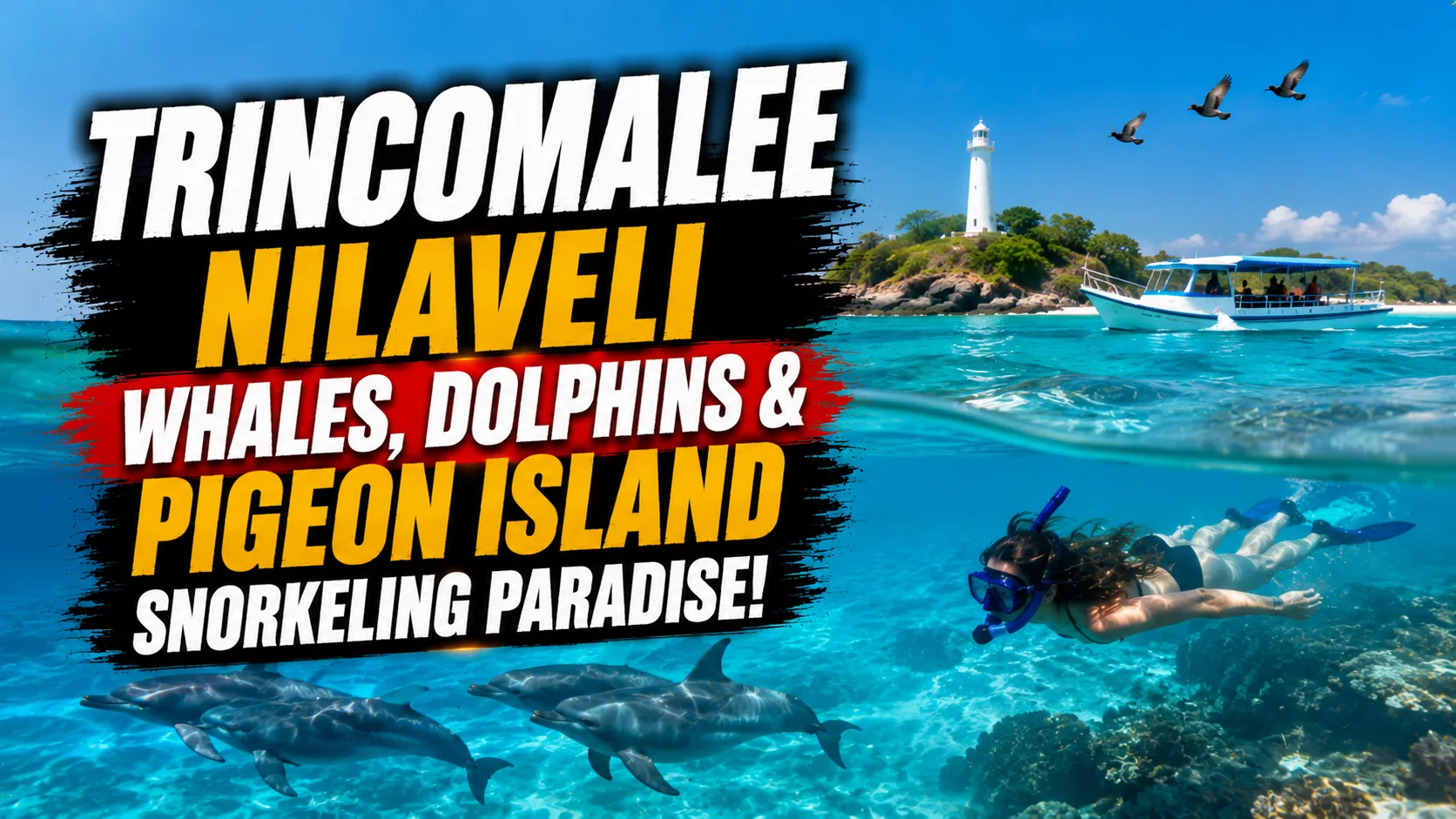
Trincomalee and Nilaveli Beach: Whale Watching, Dolphins and Pigeon Island Snorkelling
Trincomalee and Nilaveli bring together several of Sri Lanka's most beautiful marine experiences. The broad beaches of the northeast invite slow mornings and warm-water swimming, Trincomalee's offshore waters offer the possibility of whales and dolphins, and Pigeon Island National Park protects coral habitat close to the Nilaveli coast. A carefully planned visit can combine beach rest, responsible wildlife watching and snorkelling without treating the ocean as a theme park.
The best experience begins with realistic expectations. Whales, dolphins, turtles, reef sharks and clear water are all possible, but none is guaranteed. Weather, wind, waves, underwater visibility, animal movement and park access change from day to day. Reputable operators cancel or alter trips when conditions are unsafe, and that decision should be respected.
Trincomalee: A Harbour City Facing the Open Sea
Trincomalee sits around one of the world's notable natural deep-water harbours. Beyond its harbour history, temples and multicultural neighbourhoods, the city has become an important base for marine excursions on Sri Lanka's northeast coast. Uppuveli and Nilaveli extend the coastal experience north of the urban centre, offering accommodation, dive centres, restaurants and boat connections.
The town and beach areas have different moods. Trincomalee is better for markets, history, harbour views and practical services. Uppuveli offers an active beach strip closer to the city. Nilaveli feels more open, with a long sandy shore and direct importance as a departure area for Pigeon Island. Travellers can stay in one place and visit the others, but should allow time rather than compressing every activity into a single rushed day.
The Calm Beauty of Nilaveli Beach
Nilaveli's appeal lies in space. Pale sand runs beside blue-green water, and the horizon can feel remarkably uncluttered on a quiet morning. During the northeast coast's more settled sea period, the water may look gentle and inviting. Even then, swimmers should assess current conditions rather than relying on photographs or yesterday's weather.
Choose an area used by local swimmers or supervised by a responsible hotel or activity provider. Ask about currents, sudden depth and boat lanes. Children and weak swimmers need close supervision, and an inflatable toy is not a life-saving device. Thunderstorms, strong wind, rough surf or poor visibility are reasons to leave the water.
Beach life is simple: an early walk, a shaded breakfast, a swim when conditions permit and seafood or Sri Lankan rice and curry later in the day. Visitors should carry reusable water bottles, avoid leaving cigarette ends or plastic on the sand, and give fishermen room to work. Modest dress is considerate away from the beach and inside nearby communities and religious places.
Whale Watching From Trincomalee
Offshore trips from the Trincomalee region may encounter blue whales, sperm whales or other cetaceans, depending on season and movement. A sighting is an encounter with a wild animal, not a scheduled performance. Some trips may find only distant blows; others may see no whale at all. Dolphins, seabirds and the changing colour of the open ocean can still make a responsible journey worthwhile.
Morning departures are common because wind and sea conditions may be more manageable earlier in the day. This is a general pattern, not a guarantee. Confirm the weather and departure directly with the operator shortly before the trip. Anyone prone to motion sickness should seek suitable medical or pharmacy advice in advance, eat according to that advice and bring sun protection and drinking water.
A responsible whale-watching boat should carry correctly sized life jackets, communications equipment, trained crew and an emergency plan. Ask whether passenger numbers are limited and how the captain behaves around whales. Boats should not race directly toward an animal, block its route, separate mothers and calves or repeatedly surround it. Sudden changes in direction, prolonged pursuit and crowding can disturb natural behaviour.
Passengers can help by remaining seated when instructed, keeping hands and equipment inside the boat, and following the crew during boarding and landing. Never ask the captain to move closer for a photograph. A distant animal behaving naturally is a better sighting than a close animal trying to escape.
Dolphins: Energy Without a Guarantee
Dolphins may be seen in groups in the waters off Trincomalee, and their speed can transform a quiet boat trip in seconds. Spinner dolphins are among the species associated with Sri Lankan waters, but identification should be left to an experienced guide when views are brief. Group size and behaviour vary, and a responsible operator will not promise jumping dolphins.
Dolphins need the same respect as whales. A boat should avoid cutting through a group, chasing it at high speed or forcing repeated approaches. Feeding, touching and entering the water with free-ranging dolphins can create risk for both animals and people. Watch their movement, enjoy the sound and leave enough space for the group to choose whether it remains near the boat.
Pigeon Island National Park
Pigeon Island National Park lies offshore from Nilaveli and protects one of Sri Lanka's important remaining coral-reef areas. The park includes a larger and smaller island, with reef habitat around the larger island. Sri Lanka Tourism records a rich variety of coral and reef fish in the area, along with possible sightings of sea turtles and blacktip reef sharks in shallow water.
Those species are possibilities, not attractions placed for every visitor. Blacktip reef sharks are wild animals and should be observed calmly from a respectful distance. Never chase, surround, touch or feed a shark or turtle. If an animal changes direction to avoid swimmers, the group is already too close.
Access is controlled because this is a national park, not an unrestricted public island. Current Department of Wildlife Conservation permits, entrance charges, visitor limits, opening arrangements and boat procedures should be confirmed on the day. Old online prices and timetables may be inaccurate. Choose an authorised operator who explains what is included in the price and provides a receipt where applicable.
How to Snorkel Without Damaging Coral
Coral is living habitat, not a rock platform. A single careless fin kick can break structures that took years to grow. Snorkellers must never stand, sit or walk on coral, even when it looks dead. Do not collect shells, coral fragments or animals, and do not use bread or other food to attract fish.
Before entering the water, test the mask and snorkel in shallow sand away from coral. Learn how to clear the snorkel and signal for help. Wear a correctly fitted flotation aid if confidence or stamina is limited. Fins should fit securely without causing pain; practise a small, controlled kick and keep the feet near the surface.
Follow the marked or instructed route and stay with the guide. Avoid narrow reef spaces where waves could push the body onto coral. Never grab coral to steady yourself. If tired, roll onto the back, signal the guide and move to safe open water rather than standing down blindly.
Do not use waterproof cosmetics or oils immediately before entering the reef when a less harmful alternative is available. Sun protection can also include a long-sleeved rash vest, hat and shade before and after snorkelling. Every bottle, wrapper and broken piece of equipment must return to shore.
Choosing a Safe Boat and Snorkelling Operator
Ask clear questions before paying. Is the operator authorised for the activity? Are park fees included? Are life jackets available in the correct sizes? Is snorkelling equipment cleaned between users? How many people will share the boat and guide? What happens if the sea becomes rough or the park closes?
A good operator gives a safety briefing before departure. It should cover boarding, life jackets, emergency signals, reef rules, swimming boundaries and what to do if separated from the group. Beginners should say so honestly. People with heart or breathing conditions, recent surgery, pregnancy, serious ear problems or limited swimming ability should seek medical advice and discuss restrictions with the operator.
Do not choose solely by the lowest price. Overloaded boats, poor equipment and rushed wildlife approaches are not bargains. Agree on the total charge, duration, cancellation policy and included equipment before leaving. Keep valuables protected from water and carry only what is necessary.
A Practical Three-Day Plan
On the first day, settle into Trincomalee, Uppuveli or Nilaveli and enjoy the beach without booking a demanding sea trip immediately after a long journey. Use the afternoon to compare operators and confirm the next morning's forecast.
Reserve the second morning for whale and dolphin watching if conditions are suitable. Keep the afternoon light because sun, motion and an early start can be tiring. Visit Trincomalee's cultural sights or rest in shade rather than rushing straight into another boat.
Use a separate calm morning for Pigeon Island. This allows enough energy for careful snorkelling and avoids treating two different marine experiences as one hurried package. If the park is closed or visibility is poor, accept the change and choose a beach walk, city visit or another authorised activity.
Leaving the Northeast Coast Better
Trincomalee and Nilaveli are beautiful because the coast still supports working communities and remarkable marine life. That beauty is vulnerable to plastic, anchors, fuel pollution, crowding, coral contact and irresponsible wildlife pursuit. Visitors influence the industry through the operators they choose and the behaviour they reward.
The finest memory may be a whale surfacing in the distance, dolphins moving beside a respectful boat, sunlight crossing a reef fish, or simply Nilaveli's quiet blue horizon. None needs to be touched or chased. Travel gently, follow current park rules and let the ocean keep some of its mystery.



Loading comments…