


Kataragama Sacred City: Spiritual Travel, Temple Rituals, Jungle Atmosphere and the Peaceful Menik Ganga
Kataragama is one of Sri Lanka's most powerful sacred cities. Located in the deep south near the dry-zone forests, it is a place where devotion, pilgrimage, ritual, nature and silence meet. For many visitors, Kataragama is not only a town or a temple stop. It is a spiritual journey shaped by the Ruhunu Maha Kataragama Dewalaya, Kiri Vehera, the peaceful Menik Ganga, jungle paths, oil lamps, drums, vows, flowers, incense and the deep faith of thousands of pilgrims.
The beauty of Kataragama is different from the beauty of a beach or mountain viewpoint. It is felt in the early morning when devotees walk quietly toward the shrine. It is heard in temple bells, chanting and ritual drums. It is seen in white clothes, trays of flowers, fruit offerings, kavadi devotion, evening lamps and the soft river water where pilgrims wash before worship. It is also felt in the surrounding jungle atmosphere, where the sacred city still carries the memory of an old forest shrine.
A Sacred City for Many Faiths
Kataragama is special because it is venerated by people from different religious and cultural traditions. Buddhists, Hindus, Muslims and Vedda communities all have connections to the sacred landscape. The main shrine is associated with Kataragama Deviyo among Sinhala Buddhists and Skanda-Murugan among Hindus. Nearby sacred places, including Kiri Vehera and other shrines, give the city a layered spiritual identity.
This multi-faith nature gives Kataragama a rare atmosphere. People may come with different prayers, languages and rituals, but many arrive with the same feeling: hope. Some come to fulfill vows. Some ask for protection. Some give thanks after a difficult time. Some come for blessings before a journey, examination, marriage, business or family decision. Others come quietly, simply to feel the presence of a place that has carried faith for centuries.
Visitors should understand this before entering Kataragama. It is not only a tourist attraction. It is a living pilgrimage centre. The most beautiful way to experience it is with respect: modest dress, quiet behavior, patience in crowds and sensitivity toward rituals that may be unfamiliar.
The Ruhunu Maha Kataragama Dewalaya
The heart of the sacred city is the Ruhunu Maha Kataragama Dewalaya. This shrine complex is closely connected with the worship of Kataragama Deviyo and Murugan, and it attracts devotees throughout the year. The buildings may appear simple compared with some large decorated temples, but their spiritual power comes from ritual, memory and faith rather than ornament.
At pooja times, the atmosphere becomes especially intense. Devotees gather with offerings of flowers, fruits, coconuts and incense. Drums may sound, lamps may glow and the movement of people becomes part of the ritual rhythm. Some pilgrims stand silently with folded hands. Others hold trays of offerings with deep concentration. For many, this is a moment of surrender, gratitude or prayer.
The rituals at Kataragama are not meant to be watched like a performance. They are devotional acts. Travelers can observe respectfully from appropriate places, but should avoid pushing forward, taking intrusive photographs or interrupting the flow of worship. If you are unsure what to do, watch local devotees quietly and follow temple guidance.
Temple Rituals and Devotional Energy
Kataragama is famous for rituals that express strong devotion. During festival seasons, especially around the Esala period, the city fills with pilgrims, processions, kavadi, vows, fire-walking traditions and offerings. The annual festival is one of Sri Lanka's most powerful religious events, drawing people from many regions and backgrounds.
Kavadi devotion, body-piercing traditions and fire-walking are often associated with deep vows and acts of faith. These practices can be striking for visitors, but they should be approached with cultural sensitivity. For devotees, such rituals are not simply dramatic displays; they are connected with promises, discipline, prayer and personal spiritual experience.
Even outside the major festival season, Kataragama carries ritual energy. The daily poojas, lamp offerings, coconut breaking, chanting and quiet circumambulation of sacred spaces create a steady devotional rhythm. A traveler who visits in the early morning, afternoon or evening may experience a different mood each time. Morning feels clean and still. Evening feels warm, bright and emotionally charged.
The Peaceful Menik Ganga
The Menik Ganga is one of the most important natural and sacred features of Kataragama. According to the Ruhunu Maha Kataragama Dewalaya's own description, the Menik Ganga at Kataragama begins from the Namunukula Mountain Range and is surrounded by legends. Traditionally, devotees bathe or wash in the river before entering the shrine, preparing themselves physically and spiritually for worship.
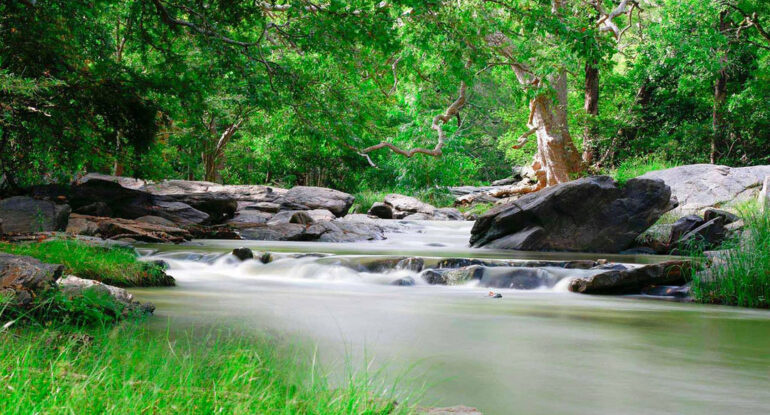
The river gives Kataragama a softness that balances the intensity of the rituals. Near the water, the atmosphere becomes calmer. Trees lean over the banks, rocks shape the flow, and the sound of water creates a natural quiet. Pilgrims may sit, wash, pray or rest before walking toward the temple. For many people, the river is not only a place to cool the body; it is part of the sacred preparation.
Visitors should treat the Menik Ganga with great respect. Do not throw plastic, soap, food packets or ritual waste into the water. Avoid loud behavior and be mindful of people using the river for religious reasons. The peacefulness of the river depends on the care of everyone who visits.
Jungle Atmosphere and Dry-Zone Beauty
Kataragama's spiritual feeling is closely connected with its jungle atmosphere. Historically, Kataragama was known as a forest shrine that pilgrims reached through difficult journeys. Even today, the dry-zone environment gives the city a different character from Sri Lanka's wet green hills or coastal towns. The land around Kataragama feels open, warm and ancient, with scrub forest, large trees, dusty paths, birds, monkeys and the nearby wilderness of Yala and the southeast.
This jungle edge is part of the sacred identity. The pilgrimage mood is not only created by temple walls; it is created by the whole landscape. Walking under trees, hearing birds before dawn, seeing monkeys near the roads, or watching the evening sky above the shrine all adds to the feeling that Kataragama is a sacred place held by nature.
For spiritual travelers, this atmosphere is important. The jungle reminds visitors that faith in Sri Lanka has often lived close to rivers, trees, mountains and wild paths. Kataragama does not feel fully separate from nature. It feels woven into it.
Kiri Vehera and the Wider Sacred Landscape
A visit to Kataragama is often combined with Kiri Vehera, the ancient white stupa associated with Buddhist devotion. The quiet, rounded form of Kiri Vehera gives a different feeling from the energized ritual atmosphere of the dewalaya. Many pilgrims visit both, allowing the journey to include both calm Buddhist reflection and the devotional energy of Kataragama Deviyo worship.
The wider sacred landscape may also include smaller shrines, offering places, pilgrim rest areas, almsgiving spaces and paths connected with vows. During festival time, the city becomes a living network of devotion. During quieter periods, the same places feel more spacious, allowing travelers to move slowly and listen to the atmosphere.
How to Experience Kataragama Respectfully
The best way to experience Kataragama is slowly. Arrive early if possible. Wear white or modest clothing if you can, remove footwear where required and avoid clothing that is too revealing. Carry water, but keep the area clean. If you take photographs, do so respectfully and avoid photographing people in prayer without permission.
If you attend pooja, stand where visitors are allowed and do not obstruct devotees. If you make an offering, ask a local guide or temple helper how to do it properly. If you do not understand a ritual, observe quietly rather than judging quickly. Kataragama contains layers of Buddhist, Hindu, Muslim and indigenous tradition, and each layer deserves respect.
Even if you come as a traveler rather than a devotee, your behavior affects the sacred atmosphere. A quiet visitor can receive much from Kataragama. A careless visitor can disturb the very peace they came to experience.
Best Times to Visit
Early morning and evening are often the most meaningful times to visit. Morning brings cooler air, softer light and a peaceful start to the day. Evening pooja time can be more crowded and energetic, with lamps, drums and a stronger devotional mood. Festival season is powerful but very crowded, so travelers should prepare for heat, traffic, queues and intense ritual activity.
If your goal is photography, morning light near the river and temple surroundings can be beautiful. If your goal is spiritual atmosphere, attend respectfully during pooja times and give yourself time to sit quietly afterward. Kataragama should not be rushed like a checklist attraction.
A Peaceful Spiritual Journey
Kataragama Sacred City is a place where Sri Lanka's spiritual life becomes visible in a deep and moving way. The temple rituals show devotion. The Menik Ganga offers purification and peace. The jungle atmosphere reminds visitors of the ancient forest roots of pilgrimage. The multi-faith nature of the city shows how one sacred landscape can hold many forms of faith.
For travelers seeking more than sightseeing, Kataragama offers a powerful experience. It asks for respect, patience and openness. If you walk quietly, listen carefully and treat the river and shrines with care, the city may give you something rare: a feeling of peace beneath the sound of drums, water and prayer.


Loading comments…